
Web Design: Optimized for AI Search
Web Design: Optimized for AI Search Web Design in 2026 is no longer just about visuals like colors and layouts;…

There is a conversation happening in almost every marketing team right now about the best AI content strategy for the future. Should we use AI to write our content or keep it fully human? Some people swear by AI. Others think it is killing good writing. Most are somewhere in the middle, quietly experimenting and hoping nobody notices.
Here is the reality — neither side is completely right. Pure AI content is fast but flat, while pure human content is rich but slow. The businesses actually winning in search right now are not choosing one over the other; they are building a hybrid AI content strategy deliberately, using each for what it genuinely does well.
That is what a winning AI content strategy looks like in practice. And it is worth understanding properly, because getting the balance wrong is costing businesses real visibility in Google, in AI Overviews, and in the generative search tools their customers use every day.
Table of Contents
If you have read a hundred blog posts that all somehow sound the same — same structure, same transitions, same vague conclusions — that is what happens when AI runs the whole show without a human steering it.
Human-written content drives 5.44 times more traffic than AI-only content over time. That gap exists because readers feel the difference even when they cannot explain it. AI scans patterns from billions of existing web pages and reproduces proven formulas — which means it sounds like everything else already ranking. It does not remember the specific client conversation that changed how you think about your service. It does not know the local nuance of selling to businesses in Chennai versus Bangalore. It cannot make a judgment call about what your audience actually needs to hear right now.
Consumers recognise when something feels automated — the generic tone, the predictable structure, the SEO-perfect content — and the reaction is never positive. Google’s own quality guidelines in 2026 are specifically designed to filter out content that was clearly produced at scale without real human thought behind it. So if your entire blog output is coming straight from a prompt with no meaningful human edit, you are already at a disadvantage — especially for GEO and AEO, where being genuinely cited as a trustworthy source is the whole game.
On the other side of this, businesses still writing every single piece of content from scratch, manually, without any AI assistance, are fighting with one hand tied behind their back.
The percentage of marketers who do not use AI for content has dropped from 65% to just 5% over the past two years. That is not a trend — that is an industry-wide shift. The teams publishing consistently, ranking for more keywords, and showing up in AI Overviews and generative search results are doing it because AI has removed the bottleneck of volume. A single writer who uses AI well can now produce the research, structure, and first draft of a piece in a fraction of the time it used to take — leaving the actual human hours free for the thinking, the editing, and the storytelling that AI genuinely cannot do.
Brands executing AI-powered content strategies are producing five to ten times more content at 60 to 80 percent lower cost per piece. For a marketing manager juggling ten other responsibilities, that kind of efficiency is not optional anymore — it is how you stay competitive.
The human plus AI content strategy is not complicated in concept. It just requires being honest about what each side does well.
AI should generate drafts, not final creative. Produce variations, not core messaging. Analyse data, not interpret emotional context. Scale execution, not shape brand identity. Use AI for keyword research, building your first draft, creating structural outlines, generating FAQ variations, and adapting long-form content into shorter formats for different channels. These are time-consuming, repeatable tasks that AI handles well.
Humans own everything else. The strategy — deciding what topics to cover and why. The voice — making sure the content sounds like your brand, not a generic version of your industry. The judgement calls — knowing when a data point is misleading, when a paragraph needs a real example, when the draft says something that is technically correct but would land badly with your actual audience. AI drafts frameworks, analyses tone patterns, and tests phrasing — human editors then adapt these outputs to audience psychology and brand nuance.
Google’s ranking algorithms in 2026 prioritise human oversight combined with AI efficiency, penalising purely automated, low-quality content. So this is not just a quality argument — it is an SEO argument. Getting cited in Google AI Overviews, getting recommended by ChatGPT or Perplexity for a local query, earning featured snippets for answer-engine searches — all of that depends on content that feels credible, specific, and genuinely useful. AI alone does not get you there. Humans alone cannot produce it at the pace modern search demands. Together, they can.
Not at all. Google cares about the value you bring, not the tool you used to type it. You only get into trouble when you’re lazy—publishing mass-produced, “soulless” content that lacks a human touch. In our experience, a smart mix of AI speed and real-world human insight actually outranks purely manual writing because you can cover more ground without losing quality.
Don’t make the AI hunt for your point. Give it a punchy, one-sentence answer right at the top of your section. After that, back it up with FAQ Page schema and actual examples from your own business. AI Overviews are basically looking for the most helpful “cheat sheet” on a topic—be that cheat sheet.
We usually aim for a 70/30 split. Let the AI handle the heavy lifting—the research, the initial outlines, and the boring formatting. But that final 30%? That has to be 100% you. That’s where the “gut feelings,” the brand personality, and the tiny nuances that a machine just can’t grasp come into play.
Definitely. GEO (Generative Engine Optimization) is all about making sure your brand is “teach-able” to engines like ChatGPT and Gemini. By using AI to help you build a massive library of clear, well-structured content, you’re essentially giving these AI tools a high-quality textbook to learn about your business from.
Here’s a simple trick: Read your draft out loud. If you hit a sentence like “in today’s fast-paced digital landscape,” delete it immediately—no one actually talks like that. Kill the filler, throw in a specific local story or a recent client win, and mess with your sentence lengths. Humans are messy and unpredictable; your writing should be too.
The human versus AI debate in content marketing has always been the wrong question. It was never about choosing one. It was about figuring out what each does well and building a workflow where neither is wasted.
For sustainable long-term growth, the hybrid model reigns supreme. AI brings the speed, the consistency, and the scale that modern content demands. Humans bring the creativity, the judgement, and the brand voice that makes people actually want to read what you publish — and that makes Google, ChatGPT, and every other search system trust it enough to recommend it.
At Turnihi Tech Solutions, we help forward-thinking brands build AI content strategies that use both human and machine strengths—not just producing more content, but producing content that earns real visibility in search, in AI Overviews, and in the generative tools your customers are already using to find businesses like yours
Share Post:


Web Design: Optimized for AI Search Web Design in 2026 is no longer just about visuals like colors and layouts;…
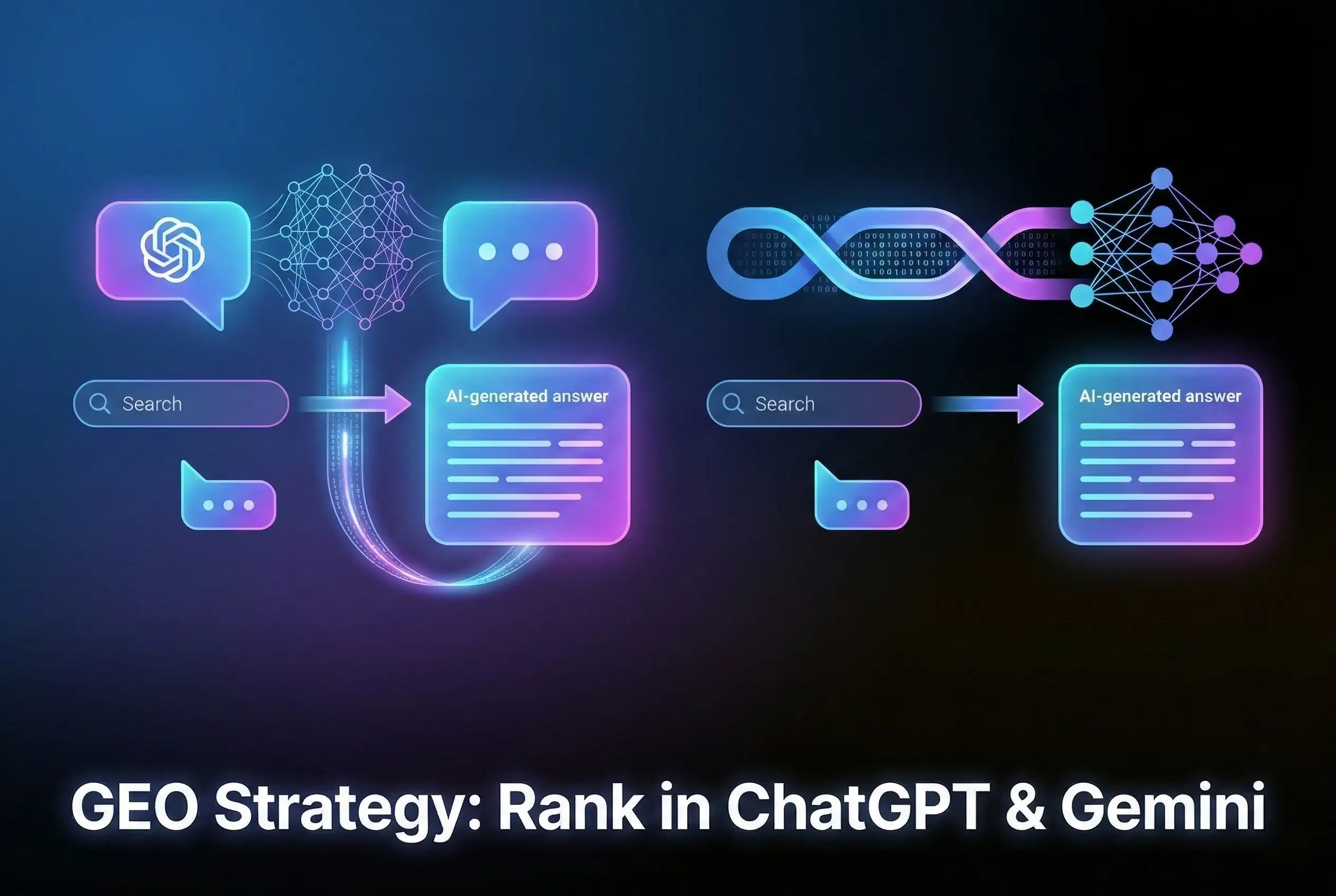
GEO Strategy: Rank in ChatGPT & Gemini Generative Engine Optimization (GEO) is the essential strategy of optimizing your brand to…

Why Having a Human Partner is Better Than an AI in Website Development If you’ve seen those ads promising a…