
AI App Development Company vs Freelancers: What to Choose?
AI App Development Company vs Freelancers: What to Choose? Hiring an AI app development company gives you a full team,…

Vibe coding had its moment. For a while, it felt like the future — type a prompt, get an app, ship in a weekend. No design skills needed. No engineering background required. Just vibes and a credit card.
But that moment is fading fast. And businesses that bet everything on it are starting to feel the consequences.
The internet is now flooded with products that look identical, say nothing, and solve problems nobody has. If you’ve seen one gradient hero section with “Revolutionize Your Workflow” in bold, you’ve seen all of them. Consumers are overwhelmed. Attention is gone before the page even loads.
This is what happens when speed replaces craft.
Table of Contents
Here’s the thing most people get wrong — AI didn’t create this problem. Unskilled builders did. They existed long before ChatGPT. They were making soulless websites in 2006, cookie-cutter apps in 2016, and now they’re vibe coding their way through 2026.
AI just gave them a faster conveyor belt.
When someone with no design sense, no product thinking, and no understanding of their customer uses an AI tool — they don’t get a better product. They get the same bad instincts, produced at ten times the speed.
A mediocre builder with a powerful tool is still a mediocre builder. The tool is a multiplier. Multiply zero by anything and you still get zero.
You know the output. You’ve seen it everywhere. It’s the SaaS landing page with three Lucide icons, a stock photo testimonials section, and a pricing table where the middle tier is always “Most Popular.” It’s the app dashboard with 47 data points because more feels like more.
The chatbot UI looks exactly like every other chatbot UI because the model trained on all of them and averaged them out. It’s not broken; it just means nothing. Consumers feel this immediately. The window where “cheap and fast” could still sell is closing. Market saturation means that once everything looks average, the businesses that show real effort stand out.
There’s another pattern hurting builders right now: chasing tools instead of building skill. Every week brings a new model, a new framework, or a new “this changes everything” announcement. Founders spend more time comparing benchmarks and watching demos than actually building or thinking.
None of that builds a better product. It just burns time while creating the illusion of progress. The builders who will thrive in this environment are not the ones with the best prompts. They are the ones who never needed pre-made prompts because they already knew how to think clearly, communicate precisely, and make decisions with confidence.
The startup world has been running on one piece of advice for years — ship fast, refine later. And yes, MVPs matter. Getting something real in front of users quickly matters.
But speed was always supposed to be a means, not the goal.
Right now, with AI tools, speed is not the constraint. Anyone can build fast. So if everyone ships fast and most products look the same, speed stops being an advantage. What separates products is quality, clarity, and craft — things that can’t be automated into existence.
Going fast and cheap today is a short-term gain. If your product lacks real value, real differentiation, and real attention to detail — you’re building toward a revenue problem, not away from one.
The answer is not to stop using AI. The answer is to use it the way skilled professionals do—as a tool that executes your thinking, not replaces it. That means knowing exactly what problem you’re solving before a single line of code is written.
It means caring about typography, spacing, hierarchy, and flow. These aren’t “nice-to-haves”; they make someone trust a product. Slowing down at the thinking stage ensures the building stage has direction. AI can handle the execution, but the thinking still has to be yours. For more on how professional standards are evolving, check out the IEEE Computer Society standards for software engineering.
If you’re a business looking to build a digital product — app, platform, website — the vibe coding era should be a warning, not a template.
The market is saturated with fast-built, forgettable products. Your customers have seen all of them. What they respond to now is work that clearly had thought put into it. Products that communicate what they do immediately. Interfaces that feel considered. Brands that don’t blend into the background.
That kind of product doesn’t come from a prompt. It comes from a team that knows what it’s doing.
Think of vibe coding as the “fast food” of the tech world. It’s when someone uses AI to spin up a website or app using only prompts, without any real strategy, technical depth, or care for the user experience. While it’s fast, the results usually feel empty—like a generic template that doesn’t quite “fit” your brand or solve your customers’ actual problems.
Because the internet is becoming crowded with “sameness.” When everyone uses the same prompts and the same tools, every brand starts to sound and look identical. In a 2026 market, being “average” is the quickest way to become invisible. Customers can sense when a product lacks a human touch, and they’re quickly losing patience with digital experiences that feel automated and robotic.
Not at all. AI is an incredible engine, but it still needs a driver. The best products today are “AI-augmented but human-led.” At Turnihi, we use AI to handle the repetitive heavy lifting so our team can spend more time on the things that actually matter: your business strategy, deep design thinking, and the small, creative details that make your brand feel real.
It starts with a conversation, not a prompt. Before a single line of code is written, you need to understand the “why” behind your project. Invest in the fundamentals—real UX research, high-performance engineering, and content that actually speaks to people. If your development team is more interested in their “tool stack” than your “customer’s pain points,” that’s a red flag.
Look for people who ask the “uncomfortable” questions. A good partner won’t just say “yes” to every prompt; they’ll challenge your assumptions to make the product better. Look for a track record of projects that actually shipped and solved real-world problems, rather than just flashy AI demos. In 2026, craft, empathy, and honest communication are the most valuable technical skills a team can have.
At Turnihi Tech Solutions, we’ve been building digital products since 2014. We’ve watched every wave — flat design, component systems, no-code tools, and now AI. We’ve seen what lasts and what doesn’t.
We use AI where it genuinely accelerates good work — not to replace the thinking, research, and craft that makes a product worth using. Every project we take on starts with understanding your business, your users, and what actually needs to be built.
If you want something fast and forgettable, there are plenty of options out there.
If you want something that works, converts, and holds up — that’s the work we do.
Let’s build something worth building.
Share Post:

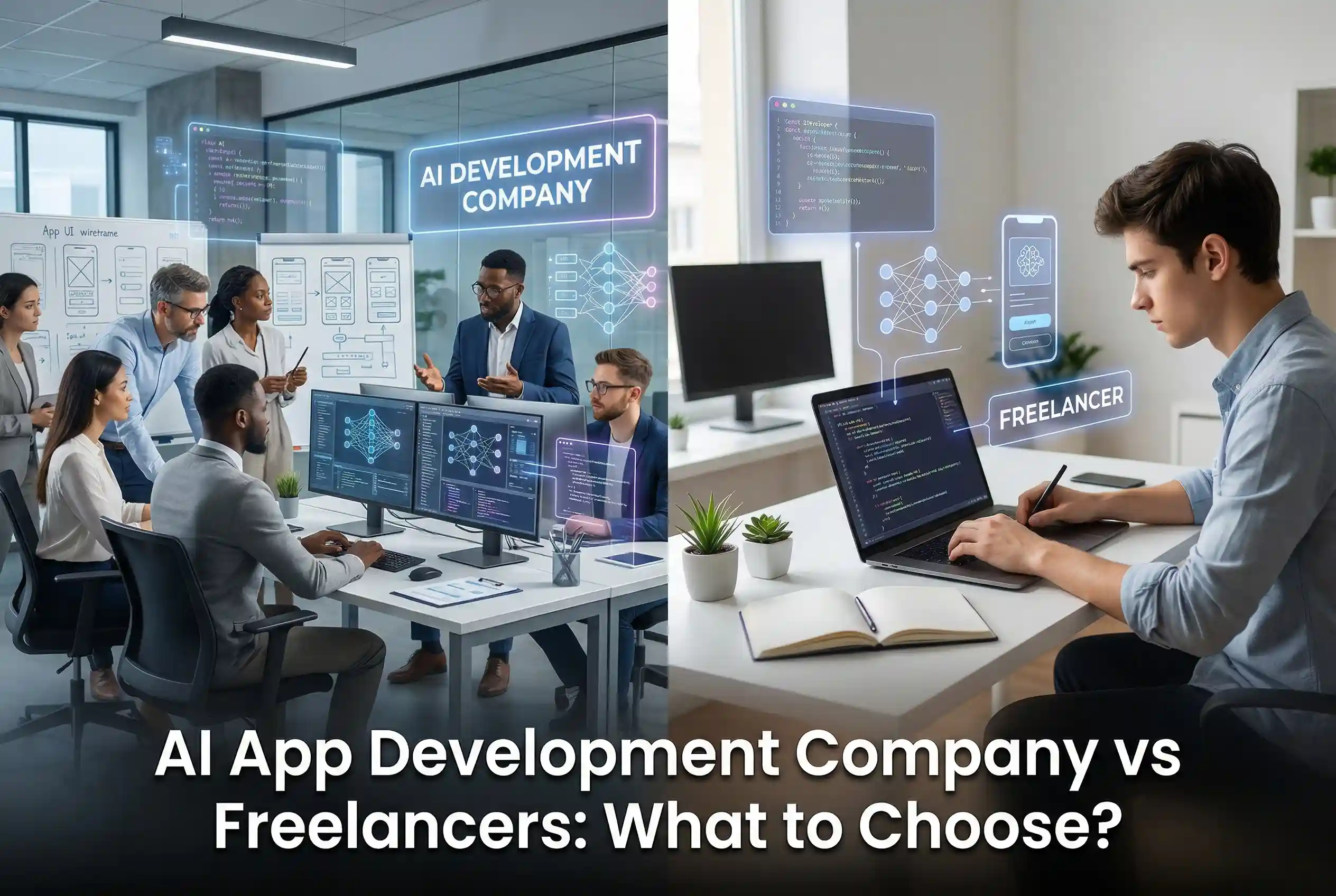
AI App Development Company vs Freelancers: What to Choose? Hiring an AI app development company gives you a full team,…
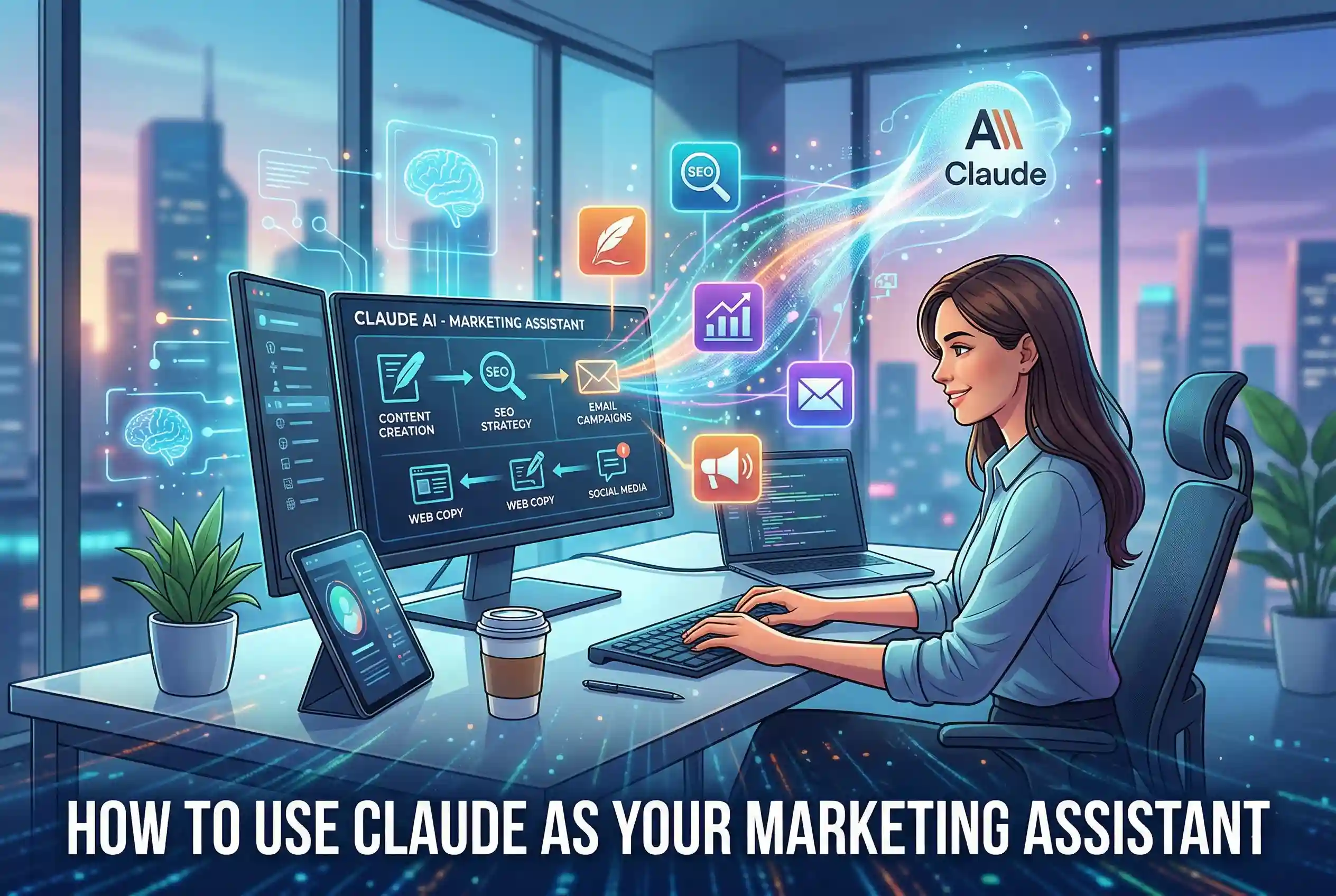
How to Use Claude as Your Marketing Assistant Claude is a free AI assistant built by Anthropic that helps businesses…
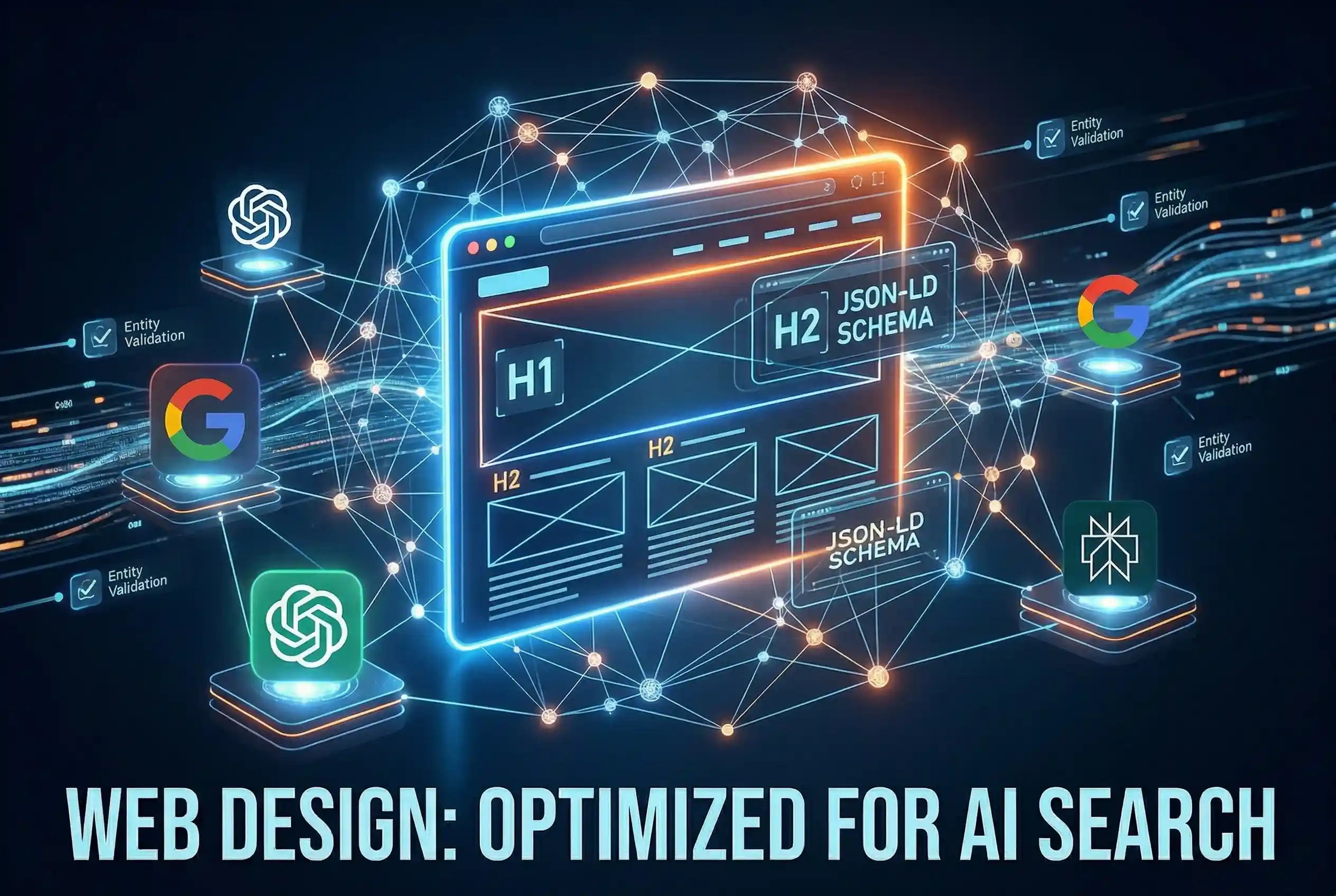
Web Design: Optimized for AI Search Web Design in 2026 is no longer just about visuals like colors and layouts;…
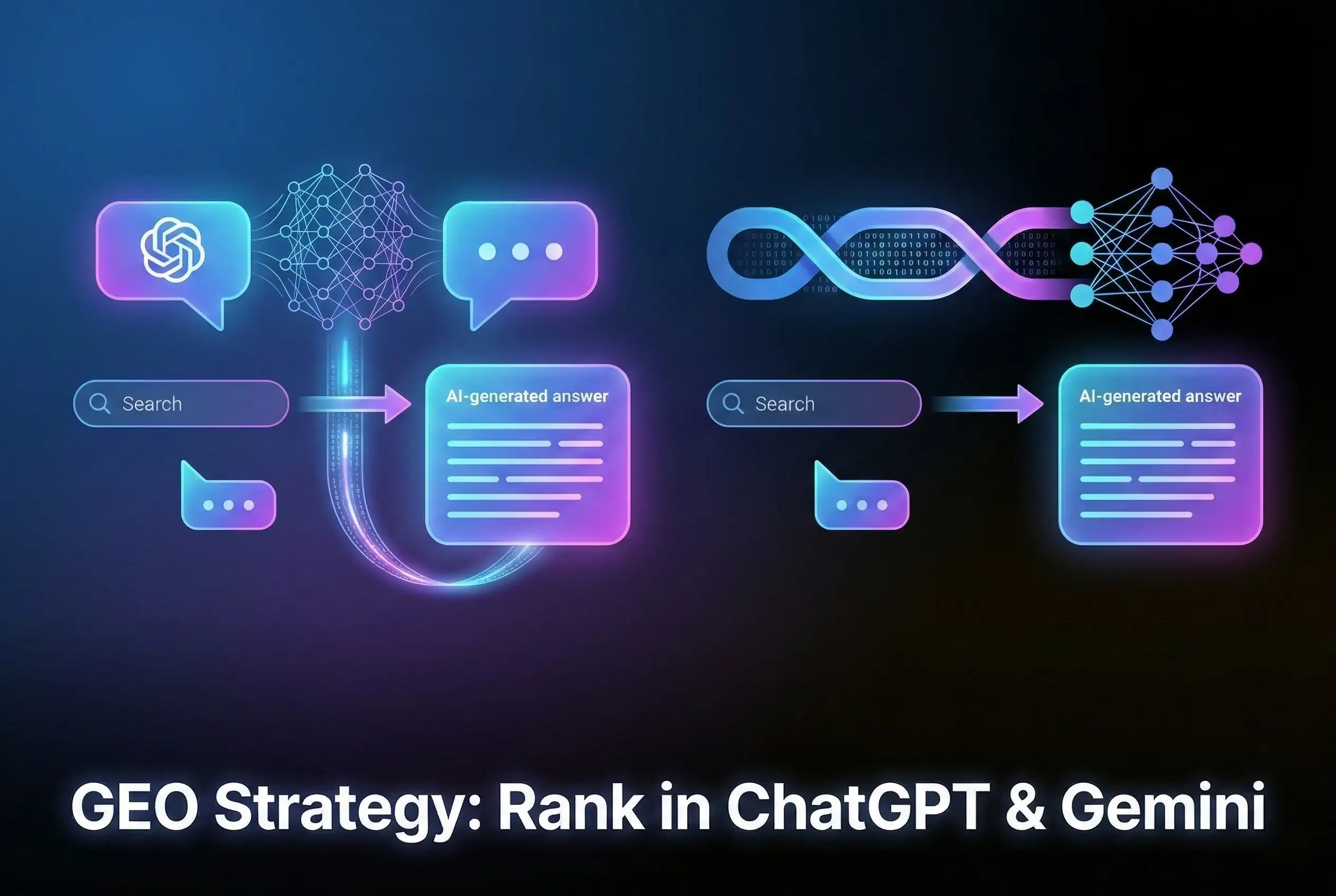
GEO Strategy: Rank in ChatGPT & Gemini Generative Engine Optimization (GEO) is the essential strategy of optimizing your brand to…
Human + AI Content Strategy: The Winning Formula There is a conversation happening in almost every marketing team right now…


Why Having a Human Partner is Better Than an AI in Website Development If you’ve seen those ads promising a…