
Your Competitors Are Using AI In Digital Marketing. Are You Falling Behind?
Your Competitors Are Using AI In Digital Marketing. Are You Falling Behind? AI in digital marketing is no longer a…

Web design and SEO are not two separate strategies — they are the same strategy working from different angles. Most businesses treat them as independent departments: designers focus on aesthetics, SEO teams focus on rankings. That split is exactly why so many well-designed websites fail to generate organic traffic, and why so many SEO-optimised sites struggle to convert visitors.
If your website looks good but ranks nowhere, or ranks well but bounces everyone off the page, the disconnect between design and SEO is likely the reason.
Table of Contents
Search engines do not just read your content — they experience your website the way a user does. Google’s Core Web Vitals measure page load speed, visual stability, and interactivity. These are design decisions, not content decisions.
A slow-loading hero image, an unoptimised font stack, or a poorly coded layout can quietly suppress your rankings without a single SEO error showing up in an audit. Google has confirmed that page experience is a ranking factor, which means your designer’s choices are directly influencing where you appear in search results.
Site architecture is another design-driven SEO factor. How your navigation is structured, how internal links are placed, and how users move between pages — all of this affects how search engines crawl and index your site. A flat, logical structure helps both users and bots find content faster.
Generative Engine Optimisation (GEO) and Answer Engine Optimisation (AEO) are changing what it means to rank online. AI-driven search tools — including Google’s AI Overviews, ChatGPT, and Perplexity — pull answers directly from web pages. The pages they pull from are not always the ones with the most backlinks. They are the ones that are cleanly structured, easy to parse, and semantically clear.
This is where web design becomes critical in ways most SEO guides skip over entirely.
For AEO, your page needs to present information in a format AI engines can extract quickly — clear headings, concise paragraphs, structured FAQ sections, and schema markup. These are not just content decisions. They are design and development decisions. If your CMS or design template does not support schema, or if your layout buries answers inside sliders and pop-ups, no amount of content optimisation will help.
For GEO, location signals need to be embedded clearly — in your metadata, your footer, your contact structure, and your on-page copy. A well-designed local landing page that integrates these signals consistently will outperform a generic page with better content every time.
Most of these go unnoticed until rankings drop:
Each of these is a design problem that produces an SEO consequence.
When design and SEO work together from the start, the results are compounding. Pages load faster because performance is built into the design. Content is structured to satisfy both human readers and AI engines. Local signals are consistent across every page element. Schema markup is part of the build, not an afterthought.
At Turnihi Tech Solutions, this integrated approach is how we build websites — not as a design project with SEO added later, but as a single system where every design decision is made with search visibility in mind.
More than most people realise. Page speed, mobile responsiveness, site structure, and Core Web Vitals are all outcomes of design decisions — and Google weighs every one of them when deciding where your site ranks.
AI engines pull answers from pages that are easy to read and clearly structured. If your layout buries information inside sliders or your headings are inconsistent, AI tools will skip your page for one that is easier to parse. Page layout, heading structure, and schema markup all play a role in whether your content gets surfaced in AI-generated answers.
Easily. A site can look polished and still load slowly, break on mobile, or use visuals that search engines cannot read. None of that shows up to a visitor until your traffic drops and you start wondering why.
Start with Google Search Console — run a Core Web Vitals check and look at your mobile usability report. If the scores are low, the problem is almost always rooted in how the site was built, not what it says.
Web design and SEO are not a choice between looking good and ranking well — you need both, and they need to work as one. Every design decision your website carries, from page speed to heading structure to mobile layout, either supports your search visibility or quietly works against it.
Businesses that treat web design and SEO as separate line items will keep patching problems that should never have existed. The ones that build both together from the start are the ones consistently showing up in search results, AI-generated answers, and local discovery.
If your website is not performing the way it should — whether that is rankings, traffic, or conversions — the gap between your design and your SEO strategy is worth examining closely. At Turnihi Tech Solutions, we build websites where design and SEO are planned together, not bolted together. If you want a website that looks right and ranks right, that is exactly what we do.
Share Post:

Related Post

Your Competitors Are Using AI In Digital Marketing. Are You Falling Behind? AI in digital marketing is no longer a…
Zero-Click Searches Are Rising – Here’s How to Win Anyway Zero-click searches are fundamentally changing how we use the internet.…

Vibe Coding Is Over : Here’s What Actually Works Vibe coding had its moment. For a while, it felt like…

AI App Development Company vs Freelancers: What to Choose? Hiring an AI app development company gives you a full team,…

How to Use Claude as Your Marketing Assistant Claude is a free AI assistant built by Anthropic that helps businesses…
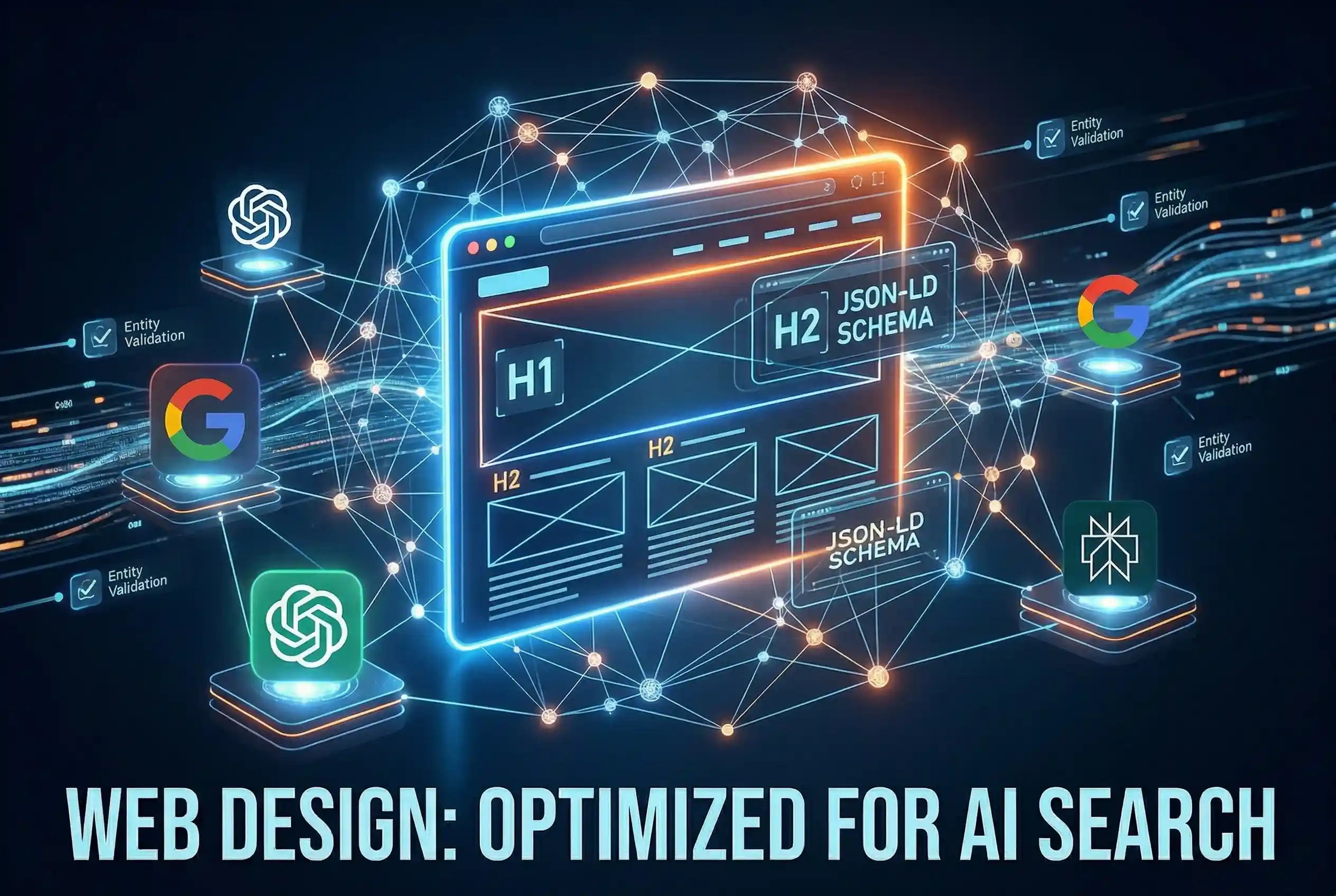
Web Design: Optimized for AI Search Web Design in 2026 is no longer just about visuals like colors and layouts;…
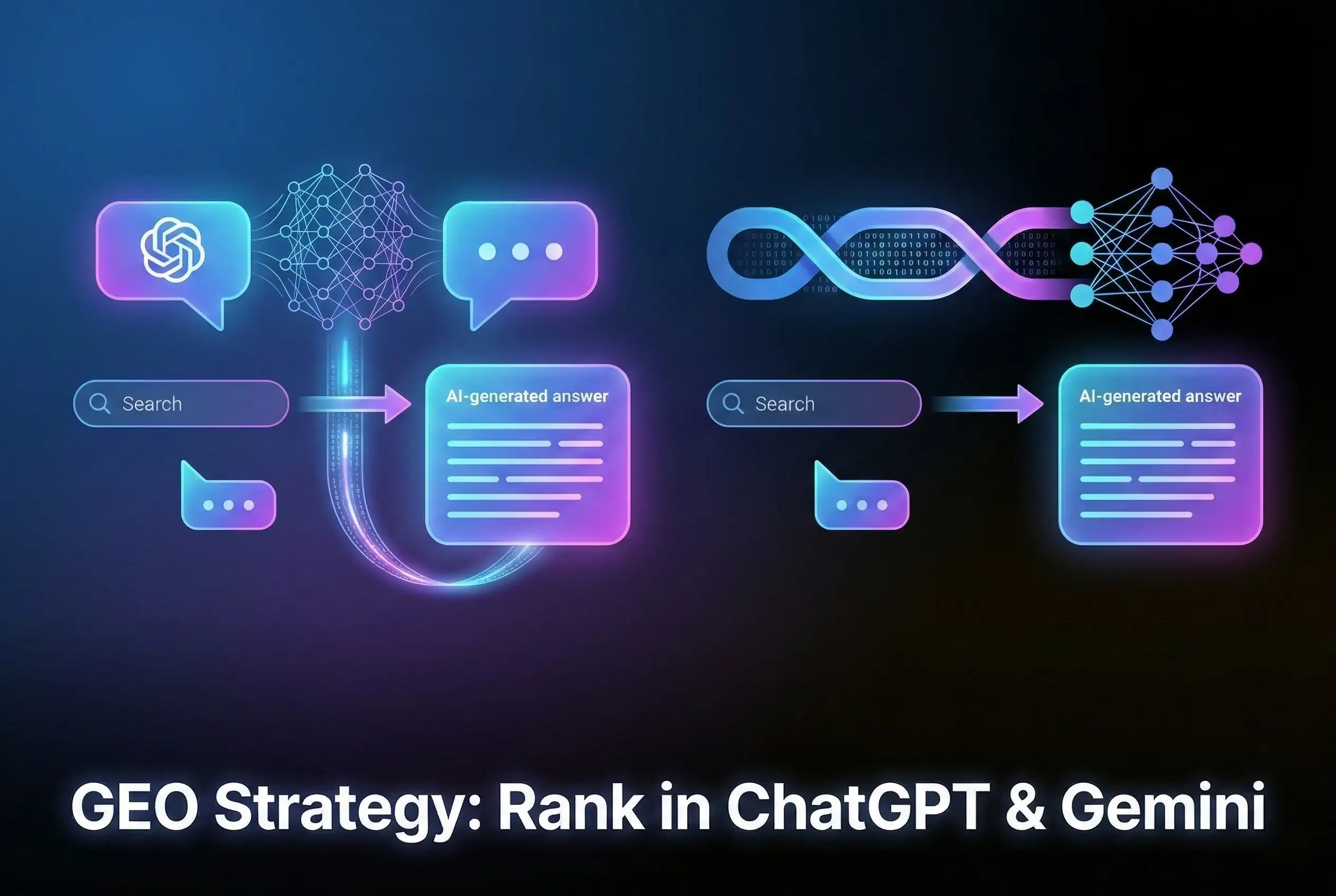
GEO Strategy: Rank in ChatGPT & Gemini Generative Engine Optimization (GEO) is the essential strategy of optimizing your brand to…

Human + AI Content Strategy: The Winning Formula There is a conversation happening in almost every marketing team right now…

Why Having a Human Partner is Better Than an AI in Website Development If you’ve seen those ads promising a…