Website Design for AI Mode: What Changes After Gemini 4 Argon
Website Design for AI Mode: What Changes After Gemini 4 Argon Website design for AI Mode is the practice of…

For a long time, Google search was easy to read. You searched, you saw ten blue links, and the top ones earned most of the clicks. AI Overviews changed that. Google now writes a summary at the top of the page and adds source links around it. Those links are called AI Overview citations, and they are now one of the few ways your website can earn a visit from an AI answer.
The problem is that Google will not leave them alone. Since September, it has tested new positions, new designs, and even new text inside the citation cards. Every test changes how visible your link is. A link that people could see last month may sit lower on the page today, or carry a description that Google wrote for you.
For business owners, this raises a practical question. If the way AI Overview citations appear keeps moving, how can you protect your traffic? This blog explains what Google has changed, how it affects your clicks, and what your website should do about it.
Quick answer: Google has tested a thinner citations panel, moved citation cards to the bottom of the answer, adjusted how links display, and added AI-written summaries inside the cards. Reports now suggest it is testing the removal of the card panel on desktop.
The changes started in early September, when Google tested a thinner citations panel. Later that month, it tested moving the citation cards from the right side of the answer to the bottom on desktop. In October, Google adjusted how links appear in both AI Overviews and AI Mode. It then tested AI-generated summary snippets inside the citation cards.
A recent report says Google is also testing the removal of the citation card panel on desktop. That test is not confirmed, so treat it as a warning sign and not a final change. The pattern still tells you something useful. Google has not settled on how much space source links deserve.
A link beside the answer is easy to notice. A link at the bottom needs a scroll, and many people never get there. A link with an AI-written summary may answer the question before anyone clicks. If the panel disappears, the click path disappears with it.
This is why being cited no longer guarantees traffic. Your page can appear in the answer and still send fewer visitors than it did before. Business owners should read impressions and clicks separately, because a drop in one does not always mean a drop in the other.
This change deserves attention because the description used to come from your own meta description or page text. Now an AI system decides what to say about your page. If your content is vague, the summary may be vague too. If your content is direct and specific, the summary is more likely to reflect what you actually want people to know.
The opening lines of each page and section matter more than they did before. Write them for readers first, and make sure they state the main point plainly. That helps people and AI systems understand your page in the same way.
You cannot control Google’s design tests, but you can control how ready your website is. Start with the basics. Check Google Search Console and fix pages that are not indexed, because a page Google cannot index cannot be cited. Make sure no setting blocks Google from showing text previews of your pages.
Next, improve how your content answers questions. Put a clear two or three sentence answer under each heading, then add the detail below it. This gives Google a clean passage to use and gives readers a fast answer. Pair that with a specific title and meta description, because visitors still choose whether to click. A useful promise gives them a reason to visit your page instead of settling for the summary.
Finally, give people something the summary cannot replace. Original data, local experience, tools, templates, and clear next steps all work well. A summary can repeat facts, but it cannot replace a page that helps someone take action. Keep your key pages updated as well, since fresh and accurate content is easier to trust.
Do not judge success by clicks alone. Watch impressions and click-through rate in Search Console, and look at branded searches to see whether more people are looking for your business by name. Check your analytics for traffic from AI platforms, which can sometimes appear as direct traffic.
It also helps to search your main topics manually. Note whether your site is cited, where the link appears, and how the description reads. A drop in clicks with steady impressions often points to a design change and not a ranking problem. Knowing this saves you from fixing the wrong thing.
AI Overview citations are the source links Google shows with an AI-generated answer. They point to the pages Google used to build the summary. They appear as cards or links beside, below, or within the answer.
Google is testing how to balance AI answers with traffic to websites. Each test shows how people interact with the links. Google has not confirmed a final design, so layouts will likely keep changing.
Yes, but fewer people may notice or click them depending on the layout. A citation at the bottom or one with an AI summary can reduce visits. Track impressions and clicks separately to see the real effect.
Keep your pages indexed and eligible for snippets. Write clear answers under each heading, and support them with accurate, useful detail. Pages that answer the question directly are easier for Google to cite.
Not always. A citation raises your visibility, but clicks depend on where the link appears and how it looks. A strong title, a clear description, and unique value on your page help turn visibility into visits.
AI Overview citations will keep changing, and your clicks will change with them. Make sure your pages are indexed, written clearly, and worth visiting beyond the summary. Then measure impressions and clicks separately so you can see what is really happening.
At Turnihi Tech Solutions, we help businesses in Chennai and beyond prepare their websites for SEO, GEO, and AEO. If you want to know how your site appears in AI answers, get in touch with our team.
Share Post:

Related Post

Website Design for AI Mode: What Changes After Gemini 4 Argon Website design for AI Mode is the practice of…

PHP Hacked: What Your Business Website Needs to Do Right Now PHP hacked means someone has broken into your website…
Google Business Profile Impressions Are Falling: Why Google Business Profile impressions are falling because AI Overviews and zero-click results now…
Google Display Ads Are Moving to Demand Gen – What to Do Google Display Ads are moving into Demand Gen,…

ChatGPT Visual Ads Are Coming. What Brands Should Know Ask ChatGPT to create an image, and you may soon see…
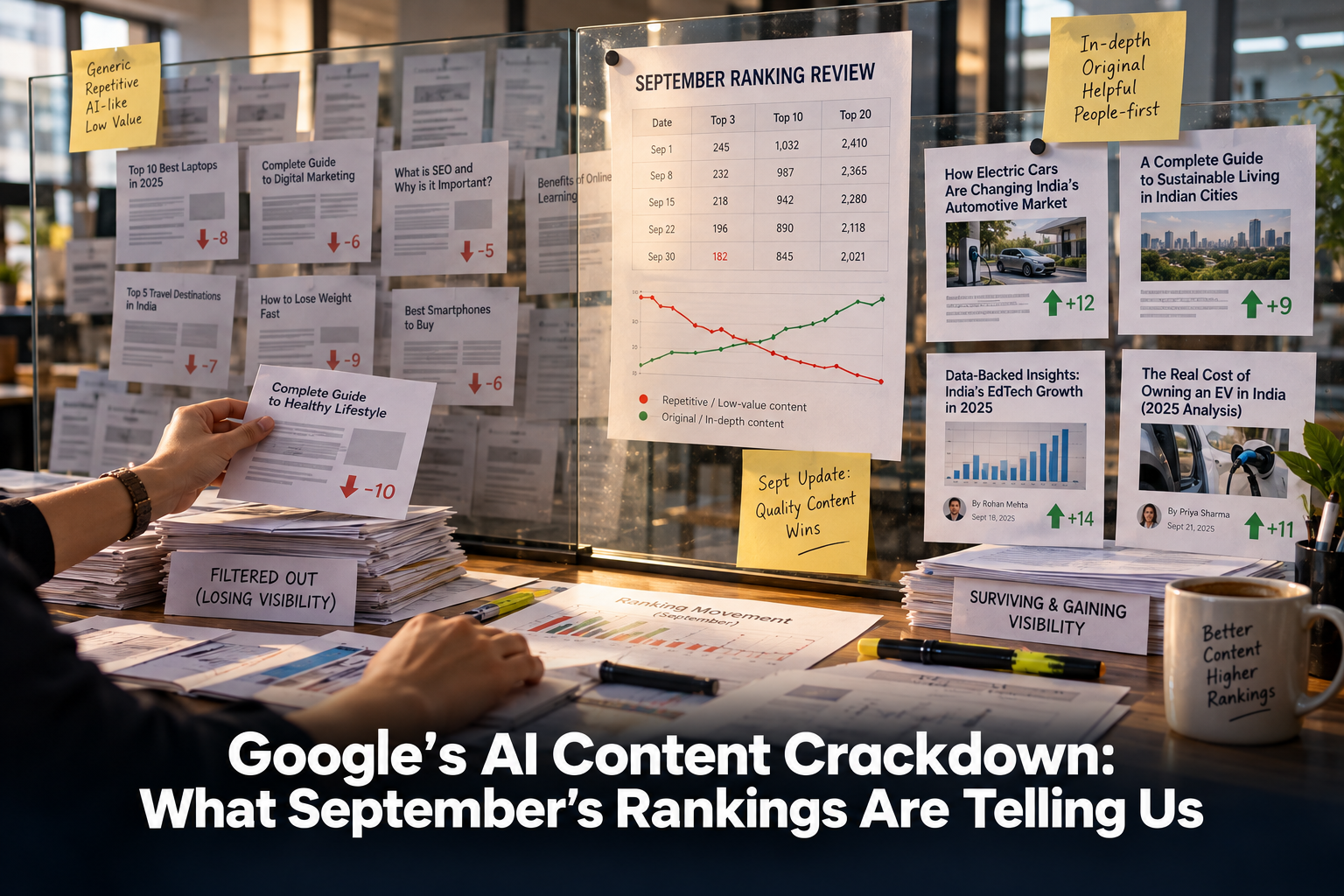
Google’s AI Content Crackdown: What September’s Rankings Are Telling Us Google’s AI content crackdown became one of the most talked-about…
Google Is Moving Your Ads to AI Max — Here’s What to Do AI Max is Google’s newest bid to…
Gemini 3.7 Flash Is Upgrading Google AI Mode — What to Do Gemini 3.7 Flash arrived inside Google AI Mode…
Used vs Cited in AI Search — What Your Brand Needs to Know AI search has quietly split brand visibility…
Category Framing: Why AI Recommends Some Brands Over Others Category framing is quietly deciding which brands show up when someone…
Why Your SEO Strategy Needs Less Content — What the Data Says Your SEO strategy probably has a publishing problem,…