Website Design for AI Mode: What Changes After Gemini 4 Argon
Website Design for AI Mode: What Changes After Gemini 4 Argon Website design for AI Mode is the practice of…

Gemini 3.7 Flash arrived inside Google AI Mode on August 14, 2026, and most business owners missed it entirely. Google added it as a selectable model for AI Pro and Ultra subscribers in English, rolling out globally — and announced it through a personal post on X rather than a formal Search Central update. No ranking system changed. Google confirmed no core update. But the engine now writing the synthesised answers your potential customers read above your search listing is a fundamentally different model than it was the week before. That quiet shift is exactly the kind of change that separates businesses paying attention from the ones wondering why their AI visibility looks different month to month.
Gemini 3.7 Flash is Google’s latest workhorse model — built for speed, efficiency, and significantly stronger performance across software engineering, web development, and agentic workflows. Google shipped Gemini 3.7 Flash with updated safeguards and substantial improvements across software engineering, web development, and agentic workflows. In practical terms, it processes information faster, follows complex instructions more accurately, and handles multi-step reasoning better than its predecessor. Gemini 3.7 Flash brings substantial improvements across software engineering, web development, and agentic planning capabilities. For search, that means the model generating AI Mode answers can now interpret more complex queries, pull from a wider range of sources, and assemble more nuanced responses than before. If your content was already appearing in AI Mode answers, a smarter model helps. If it wasn’t, the bar for getting cited just got higher.
When the answer-generating model inside AI Mode can change without any ranking-system change, a single AI Mode reading cannot isolate why a citation appeared or disappeared. That is the critical point most businesses will miss. A traditional Google algorithm update comes with a status dashboard entry, a Search Central post, and an industry-wide paper trail. Model changes inside AI Mode arrive with none of those signals. Google’s help page for AI Mode names only two options — a “Fast” model with no version number and Gemini 3 Pro — and Gemini 3.7 Flash appears nowhere on it. Businesses tracking AI visibility through snapshots will see fluctuations and have no way to explain them. The model powering the answers changed, but nothing in the standard reporting told them so. This is why measuring citation presence over time rather than in isolated snapshots matters more than ever.
A faster, more capable model raises the quality threshold for content it chooses to cite. Gemini 3.7 Flash processes queries with stronger instruction-following and better multi-step reasoning, which means it evaluates content more critically before surfacing it in an answer. Pages that provide vague, surface-level responses to questions are less likely to make the cut. Pages that answer specific questions directly, back claims with data, and structure information in a way the model can extract cleanly are significantly better positioned. The technical layer matters here too. Gemini 3.7 Flash handles agentic workflows — meaning it actively retrieves and processes information across sources rather than passively matching text. Websites that block AI crawlers, rely on JavaScript rendering for key content, or lack schema markup create friction for exactly this kind of active retrieval. Clean, crawlable, well-structured pages remove that friction entirely.
This is at least the third model addition to Search in nine months — Gemini 3 Pro in November 2025, Gemini 3.5 Flash-Lite in July 2026, and Gemini 3.7 Flash in August 2026. The pace is accelerating. Google is not waiting for annual updates to improve the AI layer of Search. It is swapping models on its own model release schedule, which moves faster than any SEO update cycle most businesses are used to tracking. Search is now part of the model launch itself, which means the model available in AI Mode changes on Google’s model schedule. That reality demands a different approach to monitoring AI visibility — one built on consistent tracking across time rather than periodic checks.
Start by auditing the pages you most want to appear in AI Mode answers. Check whether each page leads with a direct, specific answer in the first two sentences after every heading. Gemini 3.7 Flash rewards content that gets to the point fast. Verify that your schema markup is in place and accurate across your service pages, FAQ sections, and homepage. Check your robots.txt and crawler settings to confirm AI crawlers can access your content without hitting unnecessary blocks. Run test queries related to your business in Google AI Mode and note whether your brand appears in the synthesised answer. If it does not, your content is either inaccessible to the model, too thin to be cited, or losing out to competitors with stronger off-site entity signals. Each of those is a different problem with a different fix, and identifying which one applies to your site is the starting point.
No. Google confirmed no ranking system changes alongside this model addition. It affects the synthesised answers AI Mode generates, not where your pages sit in traditional blue-link results. Both matter, but they operate independently.
Google rolled it out for AI Pro and Ultra subscribers globally in English. It is a selectable model option rather than the confirmed default for all users, though Google’s pattern suggests wider availability follows initial rollouts.
Currently you cannot confirm this from outside Google’s systems. Google’s own AI Mode help documentation does not state which model powers the default “Fast” option. Tracking citation presence consistently over time is more reliable than trying to identify which model generated any single answer.
No. The fundamentals that earn citations — clear structure, direct answers, accurate schema markup, strong off-site entity signals — hold across model updates. What changes is the ceiling of quality the model can evaluate. Build for the fundamentals and model upgrades tend to help rather than hurt.
Google has not confirmed this. Based on the pattern with previous model additions, default routing to newer models has followed initial selective rollouts, but Google has not stated a timeline or confirmed this will happen with 3.7 Flash.
Gemini 3.7 Flash entering Google AI Mode is not a headline update with a press release and a rollout tracker. It is a quiet model swap that changes the quality bar for AI-cited content without touching traditional rankings. Businesses that track AI visibility consistently, keep their content structured and crawlable, and maintain strong entity signals across the web are the ones that benefit when Google upgrades its models. Those that only check their rankings occasionally will see fluctuations they cannot explain. If you want to understand how your website performs inside AI Mode and what to do to improve it, Turnihi Tech Solutions helps businesses build content and technical strategies that hold up across every model Google rolls out.
Share Post:

Related Post

Website Design for AI Mode: What Changes After Gemini 4 Argon Website design for AI Mode is the practice of…

PHP Hacked: What Your Business Website Needs to Do Right Now PHP hacked means someone has broken into your website…

Google Business Profile Impressions Are Falling: Why Google Business Profile impressions are falling because AI Overviews and zero-click results now…
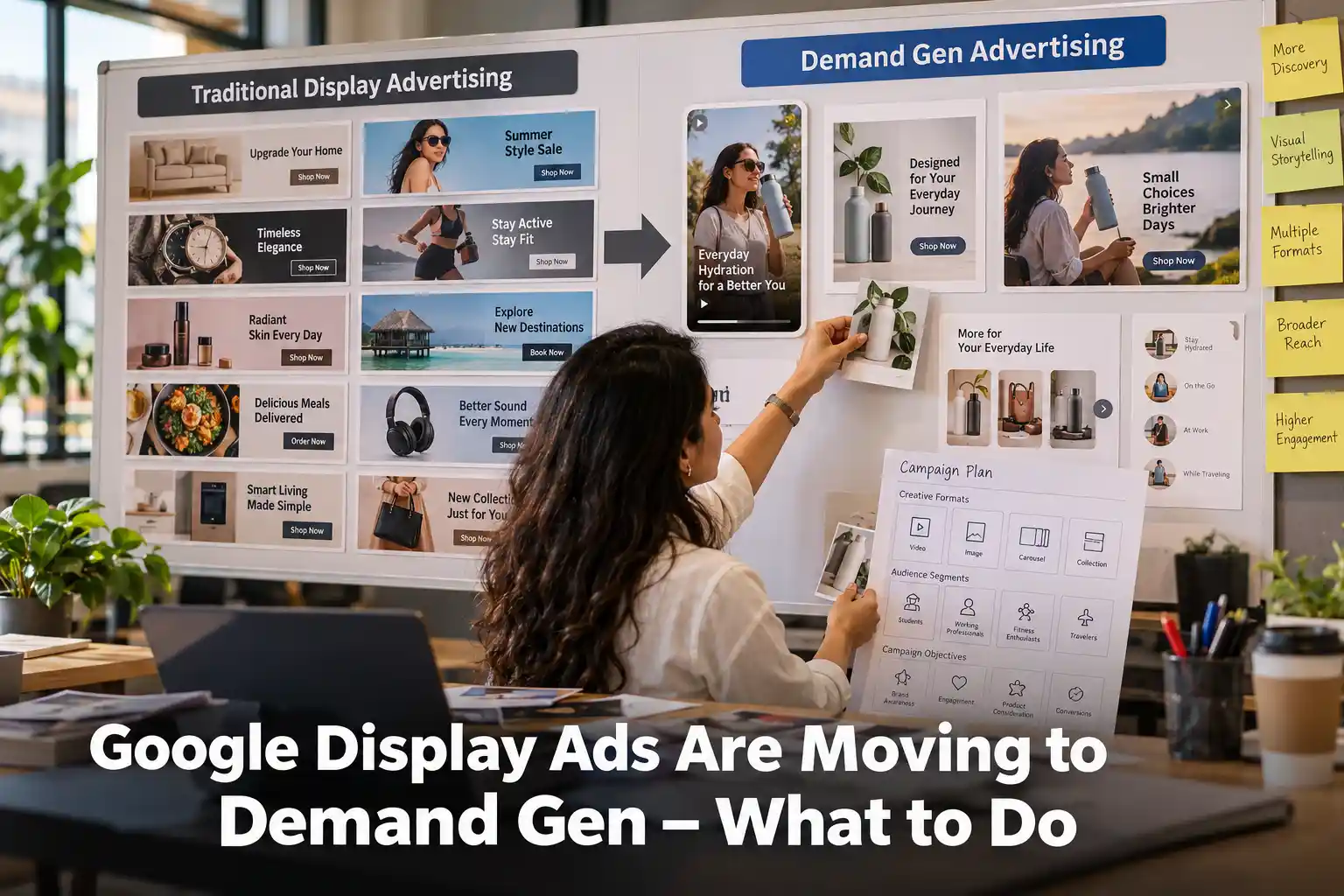
Google Display Ads Are Moving to Demand Gen – What to Do Google Display Ads are moving into Demand Gen,…

ChatGPT Visual Ads Are Coming. What Brands Should Know Ask ChatGPT to create an image, and you may soon see…

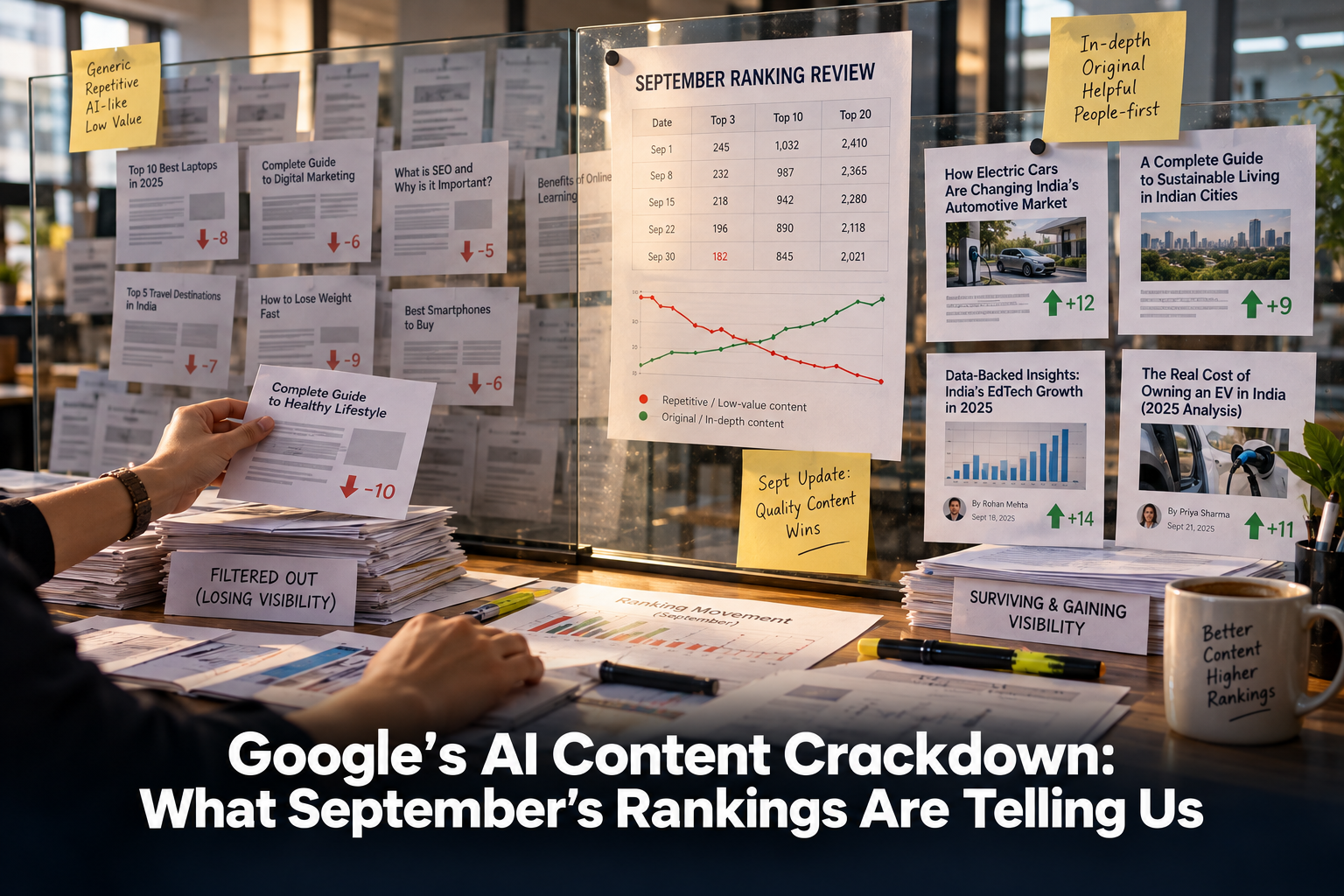
Google’s AI Content Crackdown: What September’s Rankings Are Telling Us Google’s AI content crackdown became one of the most talked-about…

Google Is Moving Your Ads to AI Max — Here’s What to Do AI Max is Google’s newest bid to…

Used vs Cited in AI Search — What Your Brand Needs to Know AI search has quietly split brand visibility…

Category Framing: Why AI Recommends Some Brands Over Others Category framing is quietly deciding which brands show up when someone…

Why Your SEO Strategy Needs Less Content — What the Data Says Your SEO strategy probably has a publishing problem,…

ChatGPT Ads Just Got Audience Targeting – Here’s What to Do ChatGPT Ads became a self-serve advertising platform on July…