
Google’s AI Content Crackdown: What September’s Rankings Are Telling Us
Google’s AI Content Crackdown: What September’s Rankings Are Telling Us Google’s AI content crackdown became one of the most talked-about…

Category framing is quietly deciding which brands show up when someone asks an AI tool for a recommendation. Before an AI model suggests a single brand name, it first decides what category your business belongs to, and that one decision shapes everything that follows. If you’ve ever wondered why a competitor keeps showing up in ChatGPT or Google’s AI Overviews when your product is just as good, category framing is very often the reason. It happens before rankings, before keywords, and often without a business ever knowing it’s taking place.
Most business owners spend their energy trying to rank for a keyword or a product name. But AI-driven search doesn’t start there. It starts by classifying your business into a category, then answers the user’s question from within that category. If the model frames your brand incorrectly, or too narrowly, you simply don’t get considered. Not because your product is worse. Because you were never in the running.
Category framing is how an AI model labels and groups a business before generating a response. When someone asks an AI assistant to recommend “the best project management tool for small teams,” the model isn’t scanning every project management tool on the internet. It’s pulling from a mental shortlist it has already built around that category.
This is different from traditional SEO, where you optimise for a search term and hope to rank. With category framing, the model has already decided what your business is for long before the user typed their question. That framing comes from patterns across your website, reviews, directory listings, and how other sources describe you online.
Search behaviour has shifted. People aren’t just typing keywords into Google anymore. They’re asking AI tools direct questions and expecting a shortlist of answers. This is where GEO, or generative engine optimisation, comes in.
Category framing sits at the centre of GEO because it determines whether your brand is even eligible to be recommended. A business that’s framed too broadly gets lost among hundreds of competitors. A business that’s framed too narrowly gets excluded from searches where it could have easily been the right fit.
Think of it like a filing cabinet. If AI models file your business under the wrong folder, or a folder that’s too general, you’re invisible every time someone searches within a more specific one.
AI models build their framing from several signals, and most businesses don’t actively manage any of them.
When these signals conflict, AI tools default to whatever description appears most frequently and most authoritatively across the web. That’s usually not your own website. It’s often a directory listing or a review platform that categorised you years ago and never got updated.
The good news is that category framing isn’t fixed. It can be corrected, and it’s more within your control than most people realise.
Start by auditing how your business is currently being described across the web. Search for your brand name alongside terms like “best” or “top” and see what category AI tools are placing you in. If the framing is off, you have a content problem, not a product problem.
From there, update your website copy to clearly and consistently state what category you operate in and who you serve. Add or refine schema markup so search engines and AI crawlers have an explicit, structured signal to work with. Make sure your Google Business Profile, directory listings, and any third-party mentions use the same category language as your website. Consistency is what builds confidence in an AI model’s framing.
It also helps to publish content that answers the specific questions your ideal category would be searched for. If you want to be framed as a premium option, your content should read like one. If you want to be framed as the beginner-friendly choice, that needs to come through clearly and repeatedly across your site.
Category framing isn’t something you fix once and forget. AI models continuously re-evaluate their framing as new content, reviews, and mentions appear online. A business that gets its framing right today can drift out of position within months if it stops reinforcing that signal.
This is why category framing deserves the same ongoing attention as traditional SEO. It’s not a one-time audit. It’s a habit of consistently telling AI models, search engines, and customers the same story about what you are and who you’re for.
Category framing is the process by which an AI model classifies a business into a specific category before deciding which brands to recommend for a user’s query. It happens before any ranking or keyword matching takes place, which makes it one of the earliest and most influential steps in AI-driven search.
Keywords help a page rank for specific search terms typed into a search bar. Category framing works differently — it determines whether your brand is even considered for a broader recommendation, regardless of how well your keywords match. A business can rank well for a keyword and still be excluded from AI recommendations if its category framing is unclear or inconsistent.
Yes. Category framing is shaped by signals across the web, including website content, schema markup, and third-party listings. By making these signals clear and consistent, businesses can reshape how AI models categorise and eventually recommend them over time.
Small businesses are often miscategorised by outdated directory listings or inconsistent online mentions that were never corrected. Fixing category framing gives them a fair chance to appear in AI-generated recommendations within the category they actually compete in, rather than being overlooked in favour of larger, more visible competitors.
Category framing has quietly become one of the most important factors in how AI tools decide which brands to recommend, and it’s also one of the most overlooked. Getting it right isn’t about gaming the system or chasing another algorithm. It’s about making sure AI models understand your business as clearly and accurately as your customers already do, through consistent signals across your website, schema, and listings. This is exactly the kind of category signalling that teams like the one at Turnihi Tech Solutions help businesses align, so that AI-driven search genuinely reflects who they are and who they serve.
Share Post:

Related Post
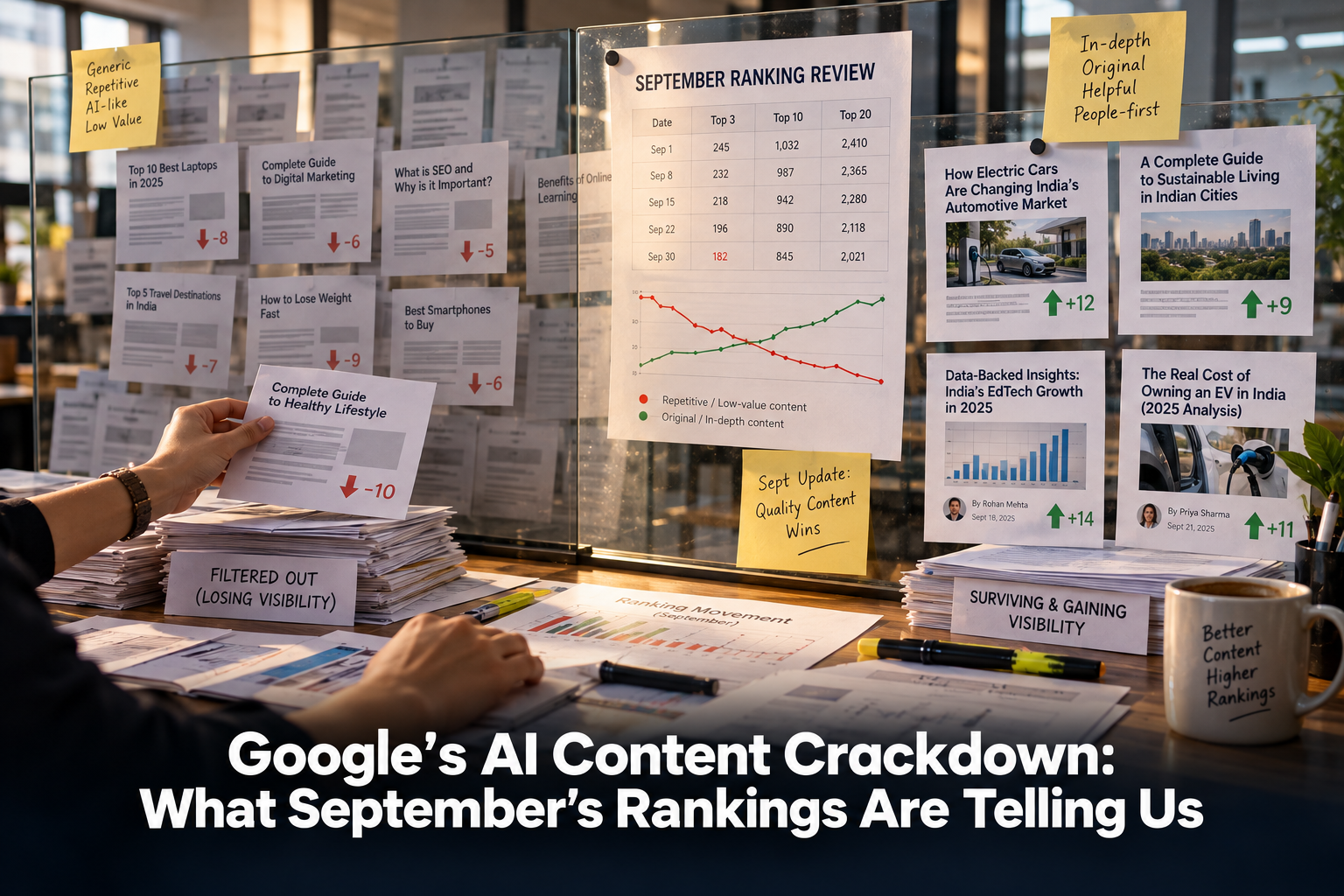
Google’s AI Content Crackdown: What September’s Rankings Are Telling Us Google’s AI content crackdown became one of the most talked-about…

Google Is Moving Your Ads to AI Max — Here’s What to Do AI Max is Google’s newest bid to…

Gemini 3.7 Flash Is Upgrading Google AI Mode — What to Do Gemini 3.7 Flash arrived inside Google AI Mode…

Used vs Cited in AI Search — What Your Brand Needs to Know AI search has quietly split brand visibility…

Why Your SEO Strategy Needs Less Content — What the Data Says Your SEO strategy probably has a publishing problem,…

ChatGPT Ads Just Got Audience Targeting – Here’s What to Do ChatGPT Ads became a self-serve advertising platform on July…

Google Is Labelling AI-Generated Ads — What It Means for Your Campaigns AI-generated ads across Google Search, YouTube, and Discover…


Google Performance Max Just Got Channel Diagnostics — What This Means for Your Ads Google Performance Max campaigns just became…

Reddit Is Now an SEO and AI Visibility Channel for Businesses Reddit SEO is no longer something only tech-savvy marketers…

Google’s AI Spam Policy Is Live — Is Your GEO Strategy Safe? Google’s AI spam policy now officially classifies attempts…
GraphRAG Explained – What It Means for Your Business in AI Search GraphRAG is quietly changing the way AI tools…