Website Design for AI Mode: What Changes After Gemini 4 Argon
Website Design for AI Mode: What Changes After Gemini 4 Argon Website design for AI Mode is the practice of…

AI-generated ads across Google Search, YouTube, and Discover now carry a new disclosure label, and if your campaigns use any form of generative AI to create or edit ad creative, this update affects you directly. Google rolled out AI ad disclosure labels on July 9, 2026, introducing a “How this ad was made” panel inside My Ad Center that tells users whether the ad in front of them was created or edited with AI. Most advertisers watched this quietly roll out while they focused on campaign performance. But the implications go beyond a small label on an ad. This update touches your creative workflow, your compliance obligations, and how consumers now see the ads your business runs. Understanding what changed and what to do about it is not optional for anyone running Google Ads in 2026.
When a user clicks the three-dot menu or the info icon on an ad, they can now open a panel called “How this ad was made.” That panel tells them whether the creative team built or modified the ad using generative AI. Google added a new “How this ad was made” section to the My Ad Center panel, accessible from the three-dot menu or information icon on ads across Search, YouTube, and Discover. This is not a warning or a penalty. Google built it as a transparency feature. The company is giving consumers a window into how ads are made, and it is doing so globally. Google is not banning AI-generated ads. It is giving advertisers a sanctioned way to disclose them. That distinction matters because until now adding an overlay or watermark to a creative could run into Google’s own policies against text overlays. Google specifically exempts the new AI labels from those restrictions.
The timing is not random. The rollout lands three weeks before the EU AI Act’s Article 50 transparency obligations kick in on August 2, 2026, with penalties reaching €15 million or 3% of global annual turnover. The European Union, India, and New York all require ads with AI-generated or edited assets to carry disclosures informing consumers that AI made the ads. Google is getting ahead of this regulatory wave rather than reacting to it. The company already operates transparency infrastructure including SynthID signals it embeds in outputs from its own generative AI tools and the political ad disclosure policy it introduced in 2023. The July 2026 update extends that same logic to every advertiser across every category.
Here is where advertisers need to pay close attention. Google’s own generative AI tools handle the disclosure automatically — your team needs to take no action. Third-party AI tools put the responsibility on the advertiser, who must tick a box manually. Google has confirmed it will not verify whether that box is ticked truthfully. So if your team uses tools like Canva, Adobe Firefly, Midjourney, or any AI image generator outside the Google ecosystem to build ad visuals, your team now carries full responsibility for disclosing that. Google is rolling the feature out gradually throughout July across Google Ads, Display and Video 360, Campaign Manager 360, Merchant Center, and Google Ads Editor. Check your platform access now. The setting may already be live in your account.
Some advertisers worry this label will hurt performance. That concern is understandable but probably overstated. Transparency has a track record of building trust rather than destroying it. Consumers already know AI tools exist. A label confirming AI involvement is unlikely to shock anyone browsing Google Search in 2026. What it does is give your audience confidence that your business operates honestly. Brands that embrace this disclosure rather than scrambling to hide AI involvement will likely come out ahead on perception. Google’s label is not a legal shield either — Google’s own documentation states the AI label setting does not guarantee compliance with specific regulations. Agencies and businesses still need their own creative-origin audit trail and legal review alongside the checkbox.
Start by auditing your current ad creative. Identify which assets your team created or edited using any AI tool, whether Google’s or a third party’s. For Google AI-generated assets, the label kicks in automatically. For everything else, find the new disclosure control in your ad submission workflow and use it. Do not treat this as optional. If your creative team uses generative AI tools to build or alter ad assets, your business now carries a legal and platform obligation to label that content. Beyond compliance, use this moment to review your creative process. Document which tools your team uses, where assets originate, and how edits happen. That audit trail protects your business if regulators ask questions later, especially if you run campaigns in the EU, India, or New York.
Only ads created or modified using generative AI carry the label. Ads made with traditional creative methods without AI involvement are not affected.
Google runs the third-party disclosure on an honour system and will not independently verify whether the box was ticked. However, non-disclosure in regulated markets like the EU carries legal risk independent of Google’s enforcement.
There is no confirmed data yet on performance impact. Early industry sentiment suggests minimal effect since AI involvement in creative is already widely expected by consumers.
The labelling policy applies to image and video ad creatives generated or modified using AI. Text-only ads are not currently covered under the same disclosure requirement.
The disclosure applies globally, but the label appearing directly on the ad itself depends on local transparency requirements in regions like the EU, India, and New York State.
AI-generated ads are not going away — and Google isn’t asking you to stop using them. What has changed is the expectation of transparency around how those ads were made. Businesses that update their creative workflows, disclose honestly, and treat this as a trust-building opportunity will adapt without disruption. Those that ignore it face both platform and regulatory risk as AI ad policies tighten through the rest of 2026. If you are unsure how this update affects your Google Ads campaigns or need help auditing your creative process, Turnihi Tech Solutions works with businesses to keep their paid campaigns compliant, effective, and ahead of every policy change Google rolls out.
Share Post:

Related Post

Website Design for AI Mode: What Changes After Gemini 4 Argon Website design for AI Mode is the practice of…

PHP Hacked: What Your Business Website Needs to Do Right Now PHP hacked means someone has broken into your website…
Google Business Profile Impressions Are Falling: Why Google Business Profile impressions are falling because AI Overviews and zero-click results now…
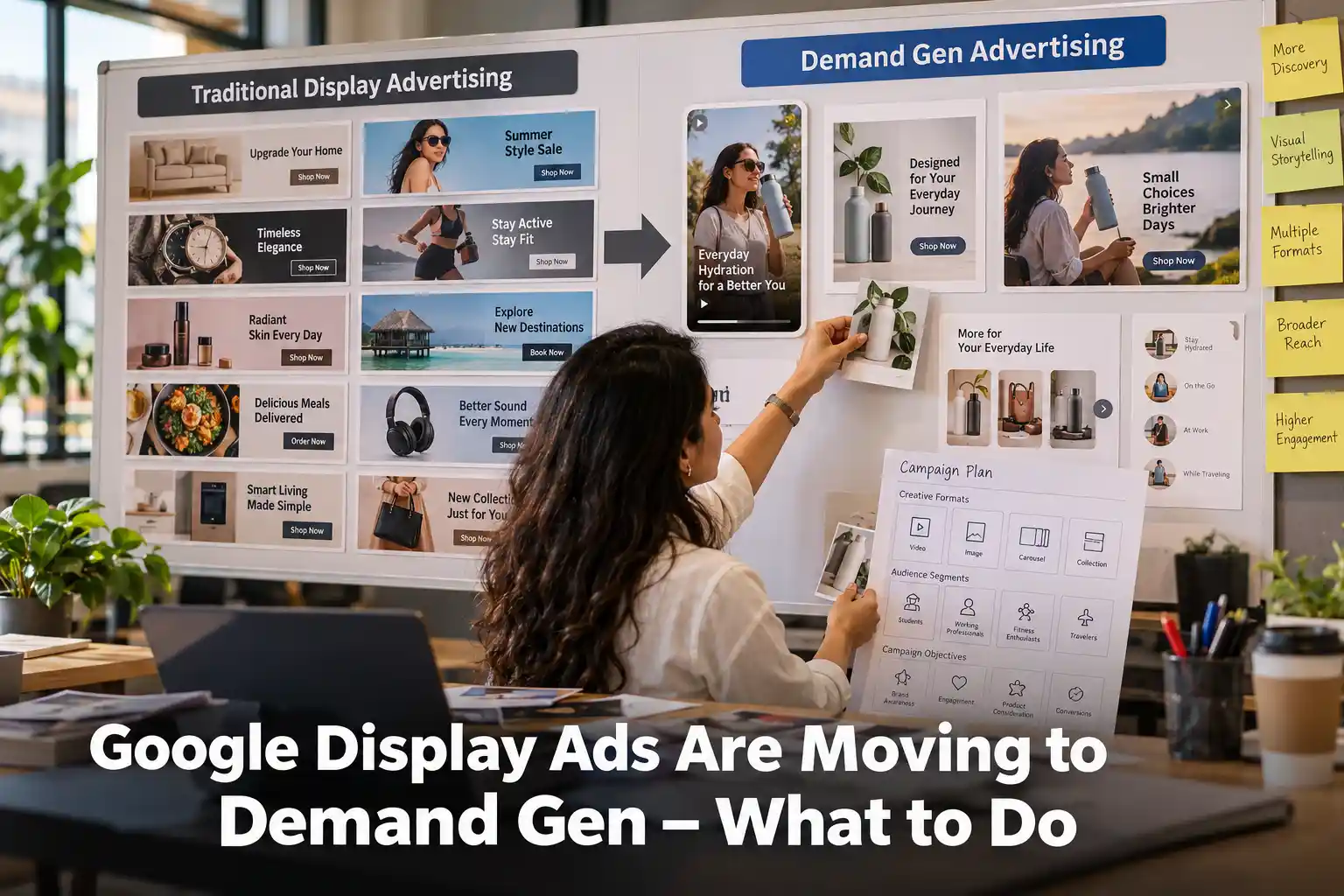
Google Display Ads Are Moving to Demand Gen – What to Do Google Display Ads are moving into Demand Gen,…

ChatGPT Visual Ads Are Coming. What Brands Should Know Ask ChatGPT to create an image, and you may soon see…

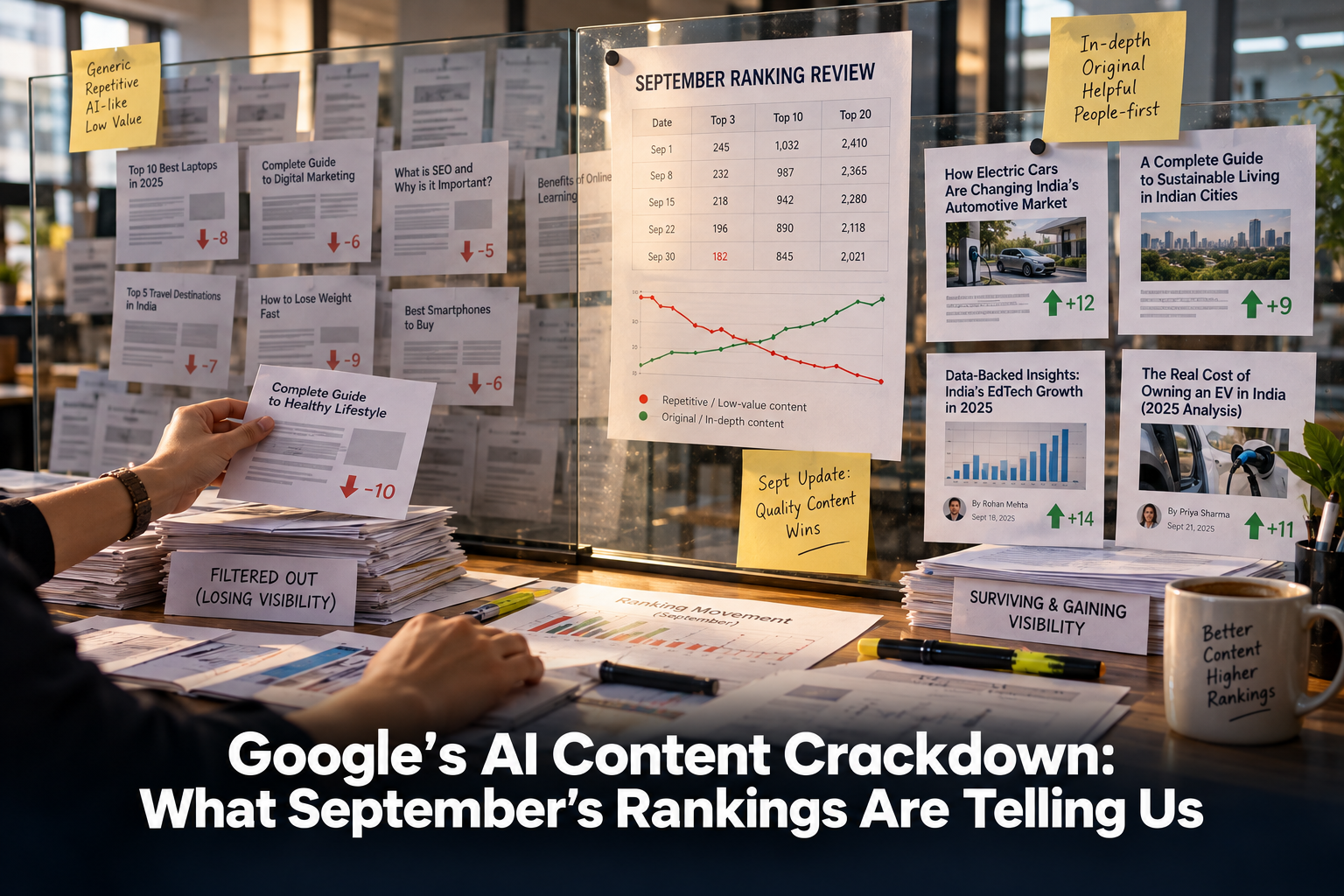
Google’s AI Content Crackdown: What September’s Rankings Are Telling Us Google’s AI content crackdown became one of the most talked-about…

Google Is Moving Your Ads to AI Max — Here’s What to Do AI Max is Google’s newest bid to…

Gemini 3.7 Flash Is Upgrading Google AI Mode — What to Do Gemini 3.7 Flash arrived inside Google AI Mode…

Used vs Cited in AI Search — What Your Brand Needs to Know AI search has quietly split brand visibility…
Category Framing: Why AI Recommends Some Brands Over Others Category framing is quietly deciding which brands show up when someone…

Why Your SEO Strategy Needs Less Content — What the Data Says Your SEO strategy probably has a publishing problem,…