Website Design for AI Mode: What Changes After Gemini 4 Argon
Website Design for AI Mode: What Changes After Gemini 4 Argon Website design for AI Mode is the practice of…
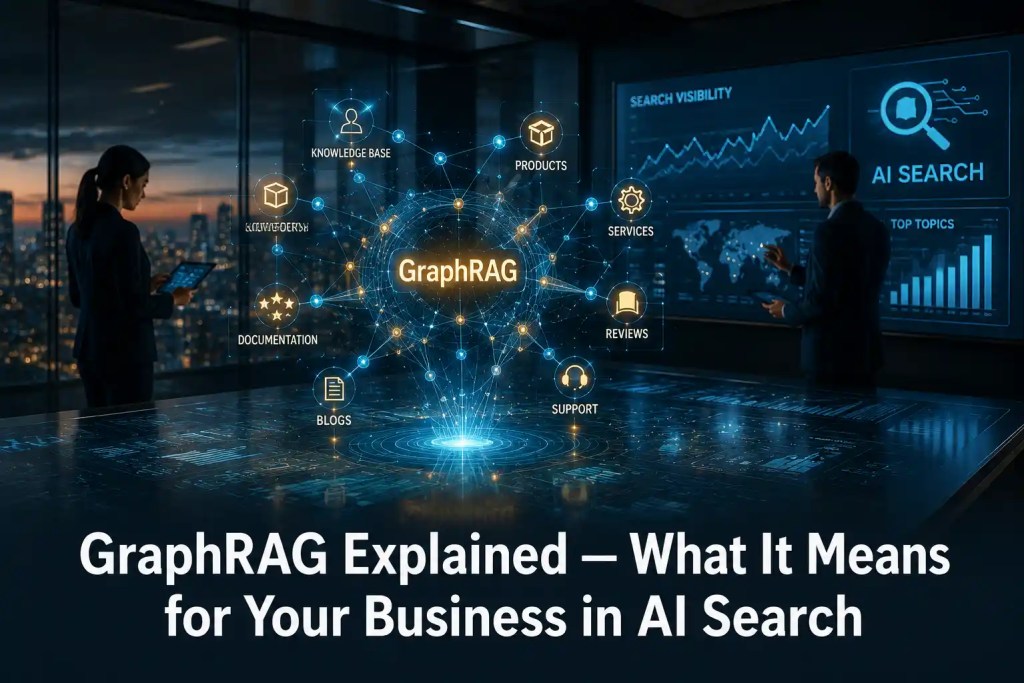
GraphRAG is quietly changing the way AI tools like ChatGPT, Perplexity, and Google’s AI Overviews decide which businesses to mention, recommend, and cite in their answers. If you’ve been wondering why some businesses show up consistently in AI-generated responses while others are completely invisible, this shift is a big part of that answer. Most business owners haven’t heard the term yet, which is exactly why understanding it now gives you a real advantage before everyone else catches up.
GraphRAG stands for Graph Retrieval-Augmented Generation. It was introduced by Microsoft Research in 2024 and has been gaining serious traction across AI search systems ever since. To understand what it does, it helps to first understand how AI tools used to find information. Traditional retrieval systems worked by pulling text chunks that sounded similar to a user’s question. This technology goes several steps further. Instead of working from isolated pieces of text, it builds a knowledge map where everything is connected. Your business, your services, your location, your team, your industry, the problems you solve — all of these become entities, and the relationships between them get mapped. When someone asks an AI tool a question, it doesn’t just find text that matches. It traverses those connections and assembles an answer that reflects how things actually relate to each other in the real world.
Here’s where this becomes directly relevant to your website. Entity-based retrieval builds a map where nodes are things like your company, your products, and your people, and the edges between them represent relationships. If your business exists clearly as an entity across the web, with consistent information on your website, your Google Business Profile, your social profiles, and third-party mentions, this system can map you accurately and confidently. If your brand information is inconsistent, thin, or scattered, it struggles to connect the dots, and you fall out of the picture when AI tools are assembling answers. Research shows GraphRAG achieves 3.4 times better accuracy than traditional retrieval methods, which means AI tools are getting much better at identifying the right businesses to surface. The ones they identify are the ones with clear, consistent, well-structured brand signals across the web.
Traditional SEO was built around keywords. Entity-based retrieval shifts the focus toward relationships and context. That doesn’t mean keywords stop mattering — they don’t — but it does mean your business needs to be understood as something real and connected, not just a page that mentions the right phrases. Your brand name, founder details, product pages, schema markup, and public profiles should all say the same thing so machines can identify and cite you correctly. This is the practical translation of what GraphRAG demands from your web presence. Your About page, your service pages, your schema markup, your Google Business Profile, and your third-party mentions all need to tell a consistent story. When they do, this system can map your business clearly. When they don’t, you become noise.
The good news is that preparing for this shift doesn’t require a complete overhaul. It requires clarity and consistency. Start with your schema markup. If your website doesn’t have structured data telling AI systems who you are, what you do, where you operate, and who your team is, that’s the first gap to close. Then audit your brand consistency across every platform your business appears on. Your business name, address, phone number, description, and service categories should match everywhere. Inconsistencies confuse entity-mapping systems and quietly reduce your chances of being cited. Next, look at your content. This technology rewards content that answers specific questions clearly and connects topics in a logical, structured way. Broad, vague content that circles around a topic without landing anywhere doesn’t give these systems enough to work with.
This is part of a broader change happening across every major AI platform right now. The strongest indicators for whether content gets cited by AI come down to accessibility and search rank — whether the content can be found and understood by AI, and how well it ranks on traditional search engines. Entity-based retrieval adds another layer on top of that. It’s not just about whether AI can find your content. It’s about whether AI can understand your business as a coherent, trustworthy entity with clear relationships to the topics your customers care about. Businesses that get this right will increasingly dominate AI-generated answers. Those that ignore it will find themselves invisible in conversations happening every day between AI tools and potential customers.
GraphRAG is not confirmed as a direct component of Google’s ranking algorithm, but the principles behind it — entity clarity, relationship mapping, structured data — align closely with how Google’s AI systems evaluate and cite content in AI Overviews and AI Mode.
Not entirely. Much of what GraphRAG rewards — consistent brand information, schema markup, clear structured content — can be handled by a good SEO team without heavy development work.
No. Traditional RAG retrieves text based on similarity. GraphRAG goes further by mapping entities and the relationships between them, which allows AI systems to answer much more complex, multi-layered questions accurately.
You won’t see a direct GraphRAG report, but you can monitor how often your business appears in AI-generated answers across tools like ChatGPT, Perplexity, and Google AI Overviews. Consistent mentions across these platforms suggest your entity signals are strong.
No. Strong traditional SEO is still the foundation. GraphRAG builds on top of it. Businesses with poor SEO fundamentals won’t benefit from GraphRAG optimisation because AI systems still rely on rankings and accessibility as primary signals.
GraphRAG is not a distant future concept. It is shaping how AI tools find and recommend businesses right now, and the gap between businesses that understand this and those that don’t is already widening. Getting your entity signals clear, your brand consistent, and your content structured is no longer just good SEO practice — it is the baseline for surviving in AI search. If you’re not sure where your business stands on any of this, Turnihi Tech Solutions works with businesses to audit and strengthen exactly these signals, combining traditional SEO with GEO and AEO strategies so your brand is one that AI tools can find, understand, and confidently recommend.
Share Post:

Related Post

Website Design for AI Mode: What Changes After Gemini 4 Argon Website design for AI Mode is the practice of…

PHP Hacked: What Your Business Website Needs to Do Right Now PHP hacked means someone has broken into your website…
Google Business Profile Impressions Are Falling: Why Google Business Profile impressions are falling because AI Overviews and zero-click results now…
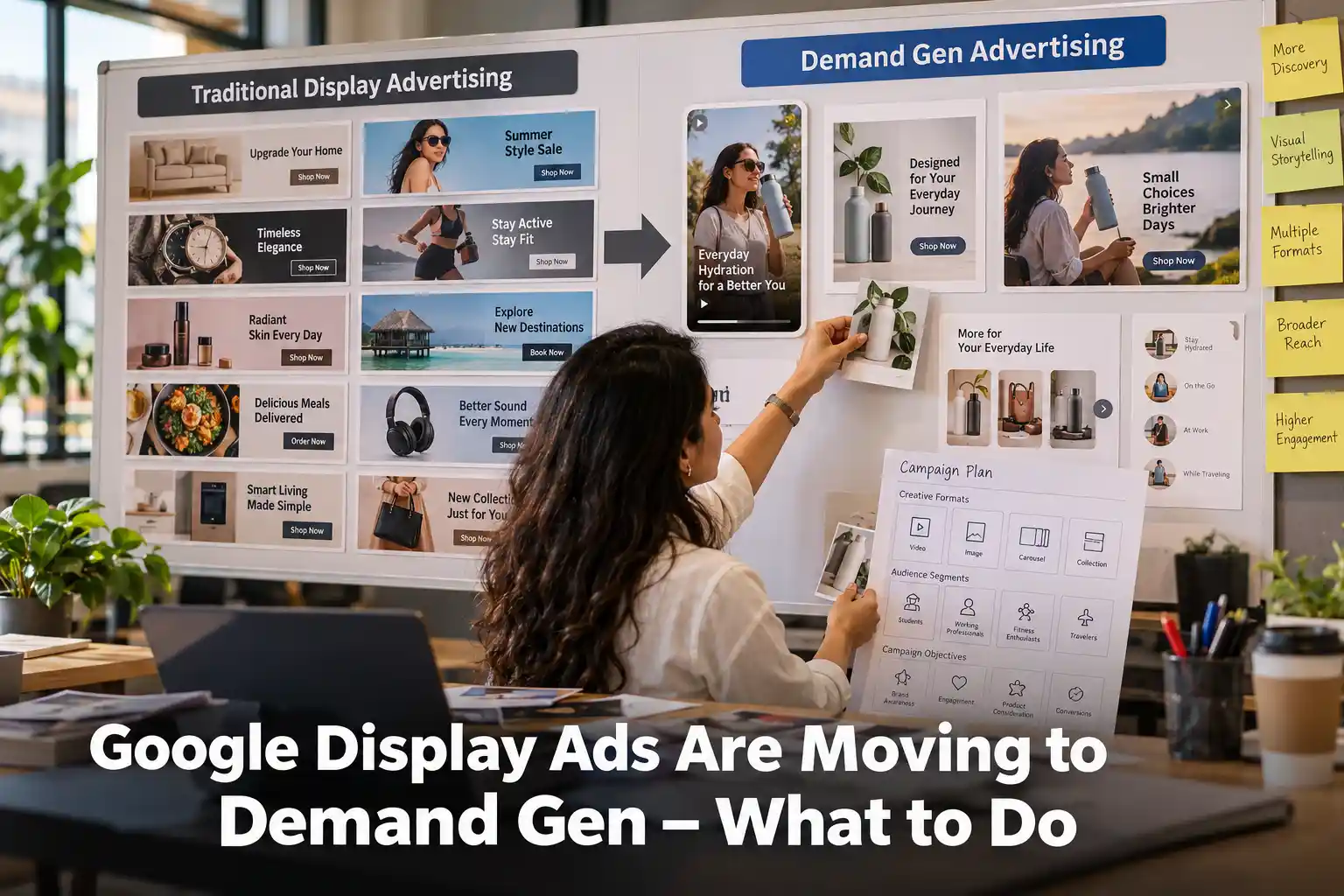
Google Display Ads Are Moving to Demand Gen – What to Do Google Display Ads are moving into Demand Gen,…

ChatGPT Visual Ads Are Coming. What Brands Should Know Ask ChatGPT to create an image, and you may soon see…
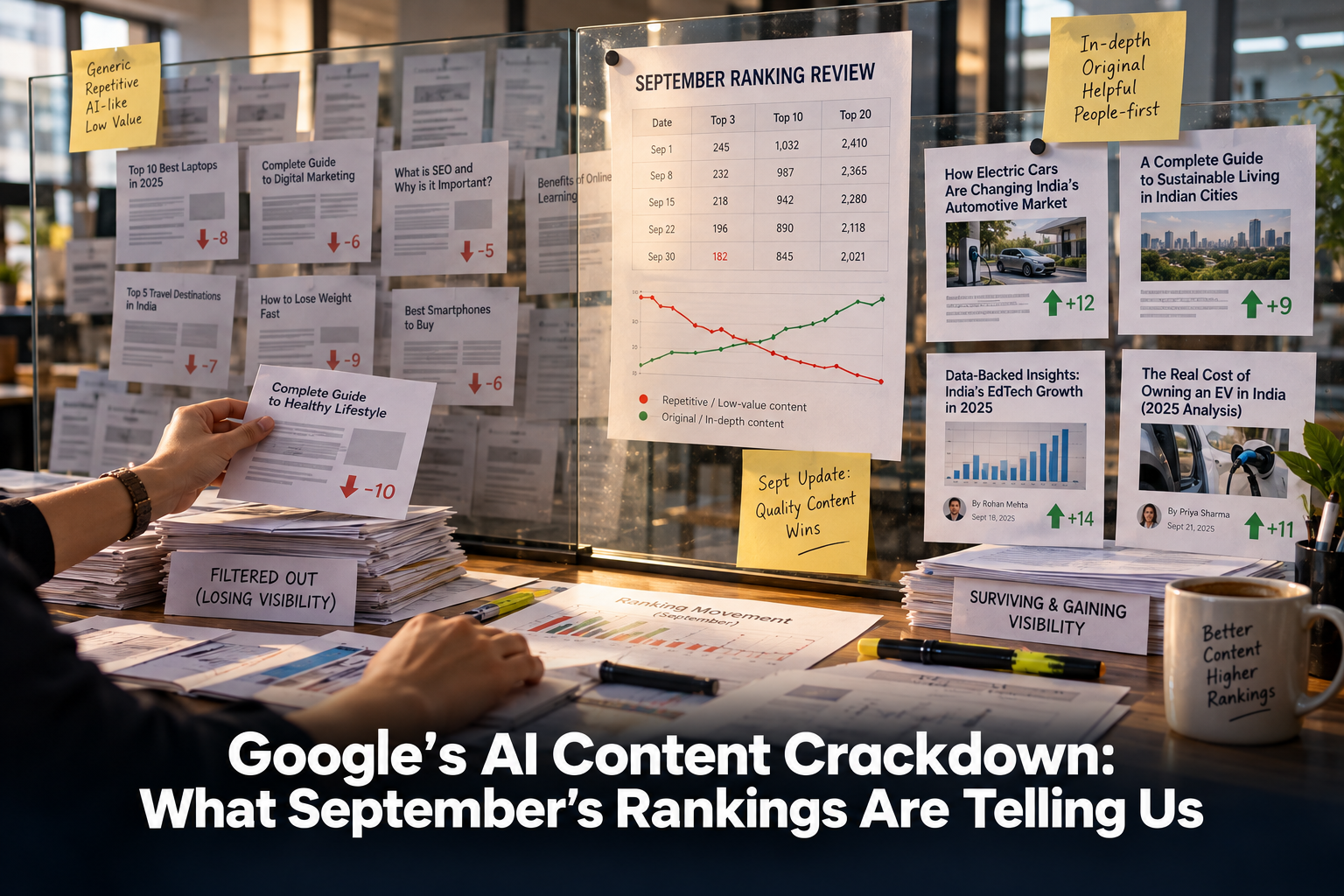
Google’s AI Content Crackdown: What September’s Rankings Are Telling Us Google’s AI content crackdown became one of the most talked-about…

Google Is Moving Your Ads to AI Max — Here’s What to Do AI Max is Google’s newest bid to…
Gemini 3.7 Flash Is Upgrading Google AI Mode — What to Do Gemini 3.7 Flash arrived inside Google AI Mode…
Used vs Cited in AI Search — What Your Brand Needs to Know AI search has quietly split brand visibility…
Category Framing: Why AI Recommends Some Brands Over Others Category framing is quietly deciding which brands show up when someone…

Why Your SEO Strategy Needs Less Content — What the Data Says Your SEO strategy probably has a publishing problem,…