Website Design for AI Mode: What Changes After Gemini 4 Argon
Website Design for AI Mode: What Changes After Gemini 4 Argon Website design for AI Mode is the practice of…

Gemini 3.5 Flash-Lite is now live inside Google Search, and most business owners have no idea it happened. Google released three new AI models on July 21, 2026 — Gemini 3.6 Flash, Gemini 3.5 Flash-Lite, and Gemini 3.5 Flash Cyber. Of the three, Gemini 3.5 Flash-Lite is the one now powering Google Search directly. This isn’t just a backend upgrade that developers care about and everyone else ignores. It changes the AI layer that sits between your website and every person searching for what you offer. Google built this model specifically for speed, efficiency, and sharper understanding of what users actually mean when they type a query — not just what words they use. That distinction is more important than it sounds. Search has quietly shifted from matching keywords to interpreting intent, and the model doing that interpreting just got significantly smarter. If you run a website, manage SEO, or care about showing up in AI-generated answers, this update changes how Google reads, processes, and decides whether your content is worth surfacing. Understanding what changed — and what to do about it — puts you ahead of the businesses still treating Google like it works the same way it did two years ago.
Think of Gemini 3.5 Flash-Lite as Google’s faster, lighter AI brain. It delivers 350 output tokens per second and significantly outperforms earlier Flash-Lite generations in agentic workflows. Google built it specifically for tasks that demand speed and efficiency over raw power. The model handles high-throughput, low-latency tasks like agentic search and document processing. Google’s VP of Search confirmed it follows instructions more accurately and understands user intent far better than its predecessor. That last detail matters enormously. How well Google’s AI reads intent decides how your content gets surfaced — or doesn’t.
Google confirmed this model runs in agentic search. It likely powers AI Overviews and AI Mode too, though Google hasn’t fully confirmed that yet. Agentic search is Google’s next big move. Instead of just retrieving information, Search will browse, compare, and summarise across multiple sources before delivering a single answer. Google announced at I/O in May 2026 that information agents would launch for AI Pro and Ultra subscribers this summer. Industry experts already see this rollout as laying the groundwork for exactly that.
Here’s what most businesses will miss. This model uses about 17% fewer tokens to answer questions. It extracts the most relevant information as fast as possible. Pages that make AI work hard — vague openings, buried answers, no structure — get skipped. Pages that lead with clear answers, use logical headings, and reach the point quickly are far easier for Gemini 3.5 Flash-Lite to process and cite. The model also shows strong improvements in long-context understanding. It reads entire pages, not just surface snippets. Your full page structure now carries more weight than ever before.
This isn’t a reason to panic. It is a reason to audit. Start with your most important pages — homepage, service pages, and any content you rely on for AI visibility. Check whether each page answers a question directly in the first few sentences. Confirm your schema markup is accurate and in place. Make sure your content moves logically from question to answer. A fast, intent-focused model rewards exactly that kind of structure. Pages heavy on filler, padded with vague language, or missing structured data are already at a disadvantage.
Google expects to launch Search agents for AI Pro and Ultra subscribers this summer. This rollout is the foundation for that. Agentic search changes everything. An AI agent won’t just show results. It will browse on your behalf, compare options, and deliver a recommendation. The websites that earn those recommendations will be clearly structured, consistently described across the web, and easy for AI to interpret quickly. The ones that aren’t will simply not appear. Google’s focus with this release is speed, efficiency, and reliability — and that direction points straight at how everyday users will find businesses within months.
Not in the traditional sense. It changes how Google’s AI layer processes and interprets your content inside AI Overviews, AI Mode, and agentic search. Strong traditional SEO remains important, but content clarity and structure now carry additional weight.
Google confirmed it is being used for agentic search and may also be used for AI Overviews and AI Mode, though the full breakdown of which model handles which surface hasn’t been fully disclosed.
Not urgently, but an audit is worth doing now. Pages that lead with clear answers, use proper schema markup, and have clean logical structure are already better positioned for this model’s strengths.
Agentic search refers to Google Search operating as an information agent — browsing, comparing, and summarising across sources before delivering a conclusion to the user. It’s the next major evolution of how people will find businesses online.
Google’s Gemini 3.5 Pro remains in partner testing with general availability promised once it clears internal checks, so further upgrades to the models powering Search are expected. Staying on top of these updates matters for long-term AI visibility.
Gemini 3.5 Flash-Lite rolling out inside Google Search is not just a technical footnote. It signals where Google is heading — faster AI processing, stronger intent understanding, and the early stages of agentic search experiences that will change how customers find businesses entirely. Websites that are clear, structured, and easy for AI to interpret will benefit. Those built on outdated assumptions about how search works will quietly lose ground. If you want to make sure your website is ready for where Google is going — not just where it’s been — Turnihi Tech Solutions helps businesses audit and optimise their content for both traditional search and the AI-powered surfaces that are already reshaping visibility in 2026.
Share Post:

Related Post

Website Design for AI Mode: What Changes After Gemini 4 Argon Website design for AI Mode is the practice of…

PHP Hacked: What Your Business Website Needs to Do Right Now PHP hacked means someone has broken into your website…

Google Business Profile Impressions Are Falling: Why Google Business Profile impressions are falling because AI Overviews and zero-click results now…
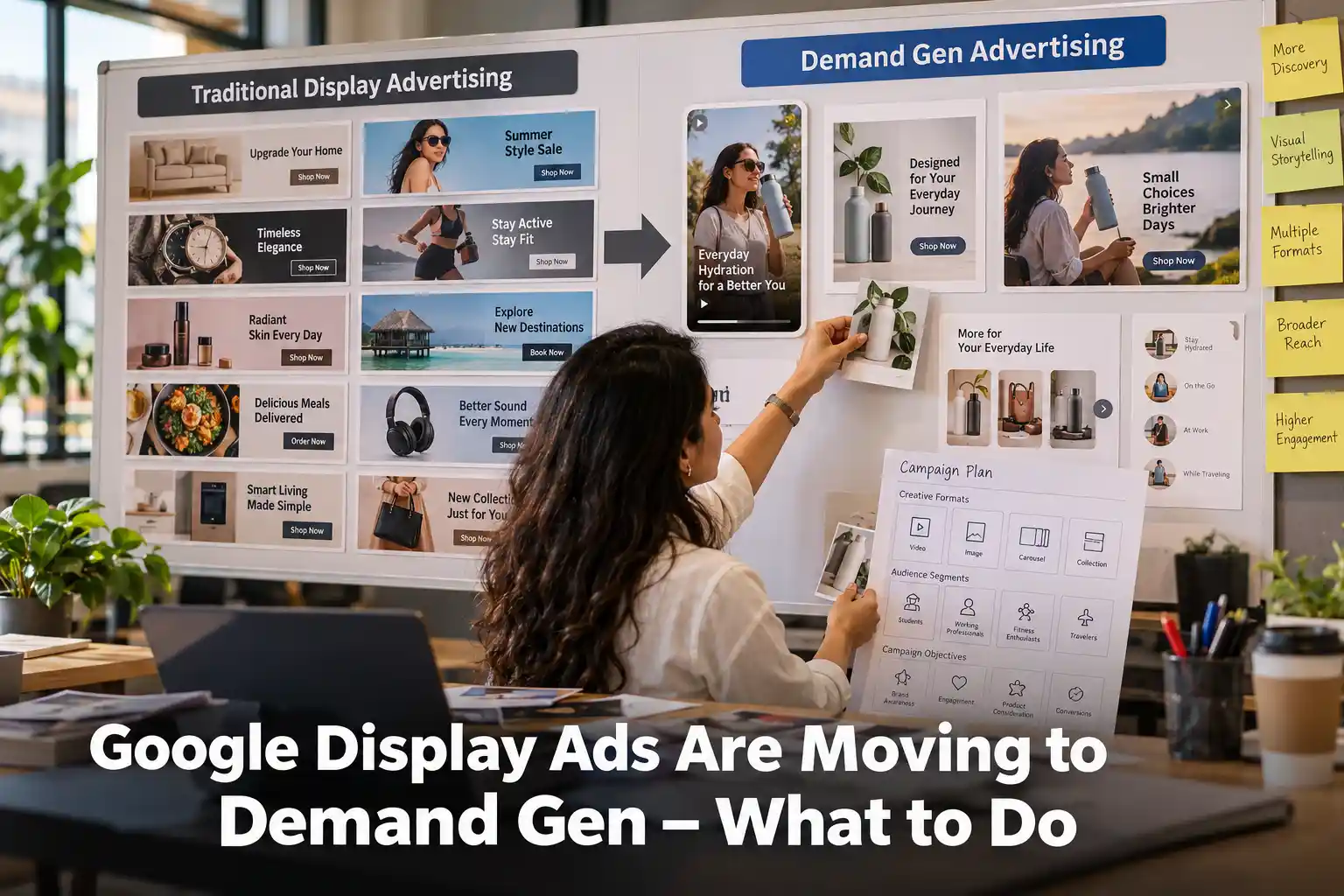
Google Display Ads Are Moving to Demand Gen – What to Do Google Display Ads are moving into Demand Gen,…

ChatGPT Visual Ads Are Coming. What Brands Should Know Ask ChatGPT to create an image, and you may soon see…

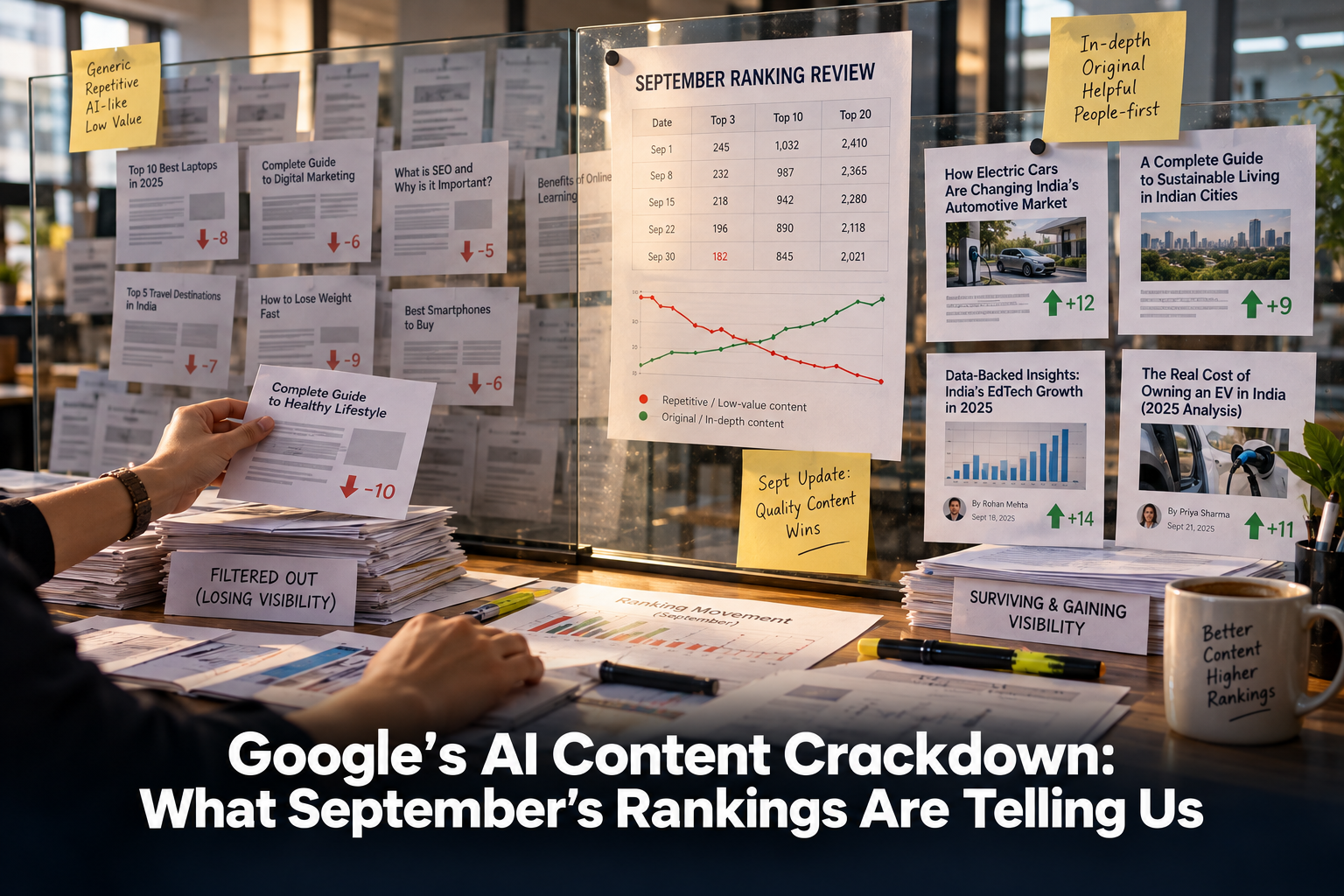
Google’s AI Content Crackdown: What September’s Rankings Are Telling Us Google’s AI content crackdown became one of the most talked-about…

Google Is Moving Your Ads to AI Max — Here’s What to Do AI Max is Google’s newest bid to…
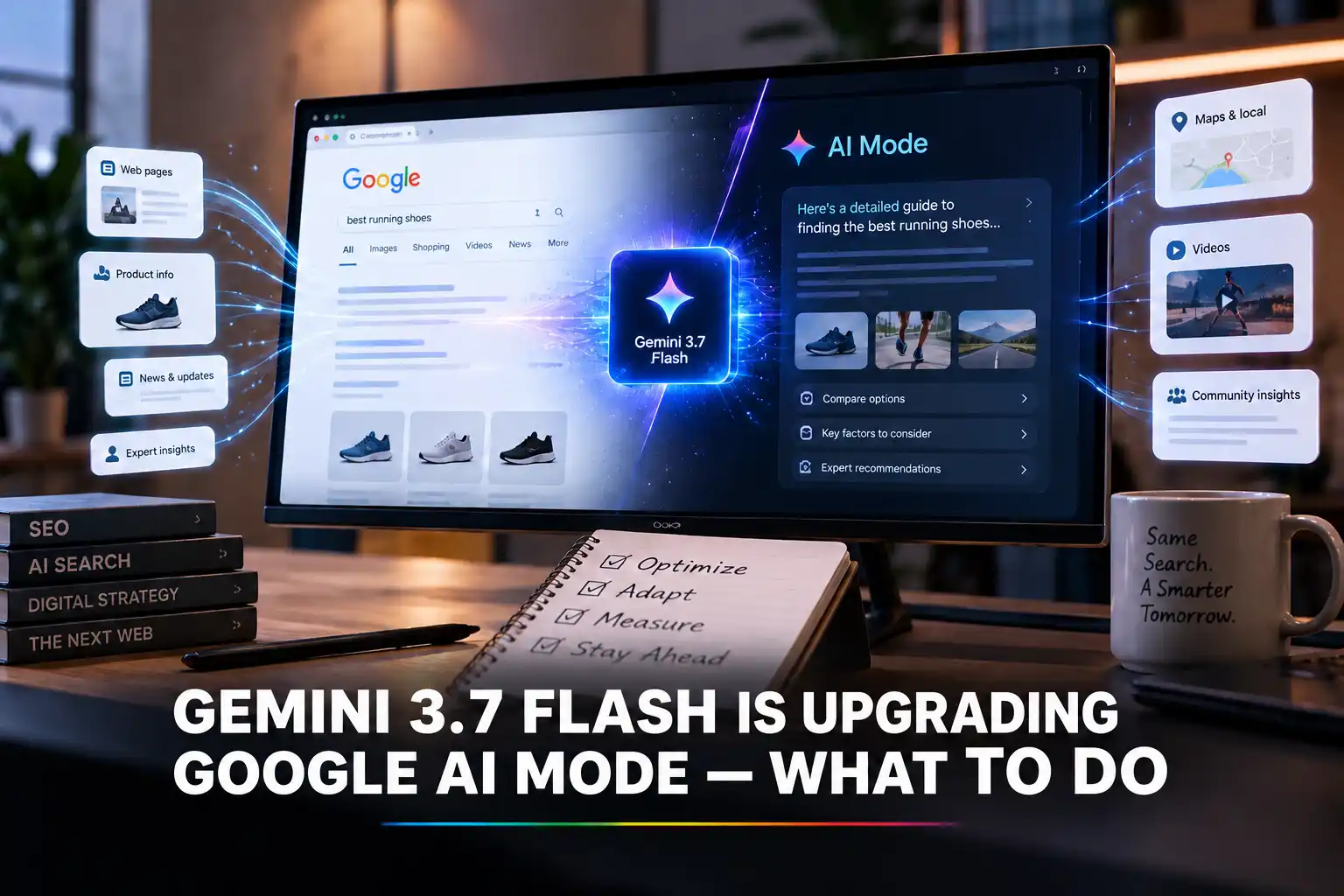
Gemini 3.7 Flash Is Upgrading Google AI Mode — What to Do Gemini 3.7 Flash arrived inside Google AI Mode…

Used vs Cited in AI Search — What Your Brand Needs to Know AI search has quietly split brand visibility…

Category Framing: Why AI Recommends Some Brands Over Others Category framing is quietly deciding which brands show up when someone…

Why Your SEO Strategy Needs Less Content — What the Data Says Your SEO strategy probably has a publishing problem,…