
Website Design for AI Mode: What Changes After Gemini 4 Argon
Website Design for AI Mode: What Changes After Gemini 4 Argon Website design for AI Mode is the practice of…

The AI performance report in Google Search Console is one of the most significant additions Google has made to its toolkit in years, and most business owners have no idea it exists yet. Google quietly expanded access in June 2026, and for the first time, website owners can actually see how their content is performing inside AI-driven search experiences like AI Overviews and AI Mode. If you have been wondering whether your website is showing up in those AI-generated answers at the top of Google, this report finally gives you real data to work with instead of guesswork.
This new report is a dedicated section inside Search Console that shows how your website content appears in Google’s AI-powered search features. It tracks visibility data including impressions, the pages being pulled into AI results, the countries your AI visibility is coming from, the devices people are using, and date-based trends over time. Think of it as the performance tab you already know from standard Search Console, but built specifically for the AI layer of Google Search. Before this feature existed, there was no reliable way to measure whether your content was being used inside AI Overviews at all. You could guess based on traffic patterns, but you couldn’t confirm it. The AI performance report changes that entirely.
Here’s the thing about AI Overviews. They appear above traditional organic results, and research shows they can reduce clicks to the top organic result by over 30 percent. That means even if you are ranking well on Google, an AI Overview appearing above you could quietly be eating your traffic without you knowing. This report gives you visibility into exactly that scenario. If your impressions in traditional search are steady but your traffic is falling, the data can show you whether AI Overviews are intercepting your audience before they ever reach your website. That kind of insight is genuinely new, and it shifts how you need to think about measuring SEO performance going forward.
Access is being rolled out gradually, so not every account has it yet. If you have access, you will find it inside the Search Console dashboard under the performance section. It sits alongside the standard search performance report rather than replacing it. Once you are inside, the data is broken down by pages, countries, devices, and dates, exactly like the traditional report but filtered specifically for AI search appearances. Google also published detailed help documentation alongside the rollout, which is worth reading if you want to understand exactly how impressions are counted inside AI experiences versus standard blue-link results.
This is where most businesses will get stuck. Having the data is one thing. Knowing what to do with it is another. Start by identifying which pages are already appearing in AI search results. These are your strongest content assets right now, and they deserve attention. Look at whether those pages have proper schema markup, clear FAQ sections, and direct answers to the questions your audience is asking. Then look at the pages that are not appearing at all. Compare them against your top-performing pages and identify the gaps. Are they missing structured data? Are they too vague in how they answer questions? Do they lack the kind of specific, direct language that AI systems prefer when pulling answers?
This tool is not something you use in isolation. It works best alongside your traditional performance data. A page with strong traditional rankings but zero AI impressions is a gap worth closing. A page with AI impressions but low traditional rankings might need stronger on-page SEO to consolidate its position. The businesses pulling ahead in 2026 are the ones treating AI search visibility and traditional SEO as one connected strategy rather than two separate things. The AI performance report is the measurement tool that makes that possible. Without it, you are optimising blind for half of Google’s search surface.
Google is rolling out access gradually. It is available to eligible website owners, and the rollout expanded significantly in June 2026. If you do not have access yet, it should become available in the coming weeks as Google widens the rollout.
According to Google, impressions in the AI report track links to your pages that appear inside AI-generated search experiences. User-activated links only count once a user activates them, which is slightly different from how standard impressions are counted.
No. They are two separate visibility surfaces. Appearing in AI Overviews does not guarantee strong traditional rankings, and ranking well organically does not automatically mean you appear in AI results. The goal is to perform well in both.
Not directly. The report shows your own site’s data only. For competitive AI visibility analysis, you would need a third-party tool alongside your Search Console data.
Yes, but thoughtfully. Use the data to identify what is working and replicate those patterns across underperforming pages. Focus on clear answers, structured content, proper schema, and genuine expertise on every page.
The AI performance report in Google Search Console is not just a new feature to explore out of curiosity. It is a measurement shift that reflects how fundamentally Google Search has changed. Businesses that start using this data now to understand their AI visibility will have a meaningful head start over those still measuring success purely by traditional rankings. If you are not sure how to interpret what your AI performance report is telling you or how to act on it, Turnihi Tech Solutions helps businesses do exactly that, connecting Search Console insights to real content and SEO strategies that improve visibility across both traditional search and the AI-driven results that are reshaping how customers find businesses every day.
Share Post:

Related Post

Website Design for AI Mode: What Changes After Gemini 4 Argon Website design for AI Mode is the practice of…

PHP Hacked: What Your Business Website Needs to Do Right Now PHP hacked means someone has broken into your website…

Google Business Profile Impressions Are Falling: Why Google Business Profile impressions are falling because AI Overviews and zero-click results now…

Google Display Ads Are Moving to Demand Gen – What to Do Google Display Ads are moving into Demand Gen,…

ChatGPT Visual Ads Are Coming. What Brands Should Know Ask ChatGPT to create an image, and you may soon see…

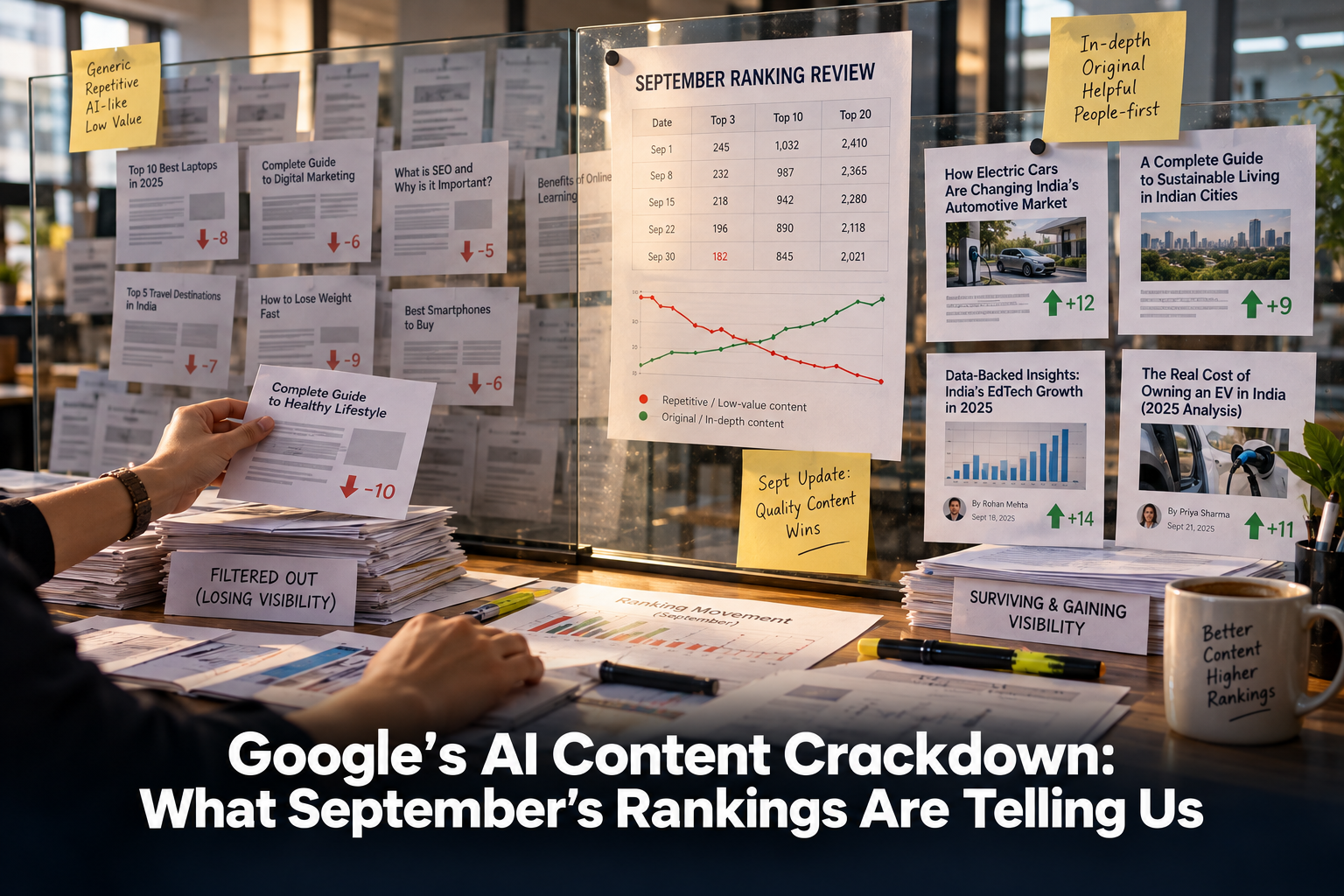
Google’s AI Content Crackdown: What September’s Rankings Are Telling Us Google’s AI content crackdown became one of the most talked-about…

Google Is Moving Your Ads to AI Max — Here’s What to Do AI Max is Google’s newest bid to…

Gemini 3.7 Flash Is Upgrading Google AI Mode — What to Do Gemini 3.7 Flash arrived inside Google AI Mode…

Used vs Cited in AI Search — What Your Brand Needs to Know AI search has quietly split brand visibility…

Category Framing: Why AI Recommends Some Brands Over Others Category framing is quietly deciding which brands show up when someone…

Why Your SEO Strategy Needs Less Content — What the Data Says Your SEO strategy probably has a publishing problem,…