Website Design for AI Mode: What Changes After Gemini 4 Argon
Website Design for AI Mode: What Changes After Gemini 4 Argon Website design for AI Mode is the practice of…

Google’s Agentic Browsing Score is a new website readiness metric that tells you how well AI agents can read, understand, and interact with your web pages — without a human in the loop. If you have run a PageSpeed Insights report recently and noticed a fifth category sitting alongside Performance, Accessibility, Best Practices, and SEO, that is it. Lighthouse 13.3, released on 7 May 2026, moved Agentic Browsing from experimental to the default configuration, which means every audit now shows it automatically, with no extra setup needed.
This is not a minor update to an existing tool. It signals a fundamental shift in how Google thinks about website quality — and what it means for your business to be visible online.

The Agentic Browsing category evaluates how well your site is constructed for machine interaction through a set of deterministic audits. Unlike other Lighthouse categories, it does not produce a weighted average score from 0 to 100. Because the standards for the agentic web are still emerging, the focus is on gathering data and providing actionable signals rather than a definitive ranking.
Instead, it reports a ratio — such as 3/3 — representing the count of passed checks, not a weighted index.
The three default checks are:
A clean accessibility tree — meaning every interactive element on your page has a proper name and role that a machine can read. A stable layout with low Cumulative Layout Shift — because AI agents that take screenshots or parse your page mid-load will struggle if content keeps moving. And a valid llms.txt file at your domain root — a machine-readable summary that tells AI agents what your site is about and where to find key information.

The reason this update matters is not just technical. For 25 years, the automated visitors to your website were crawlers designed to read and index your pages. Agents operate differently. They read and act. They fill out forms, click buttons, complete checkouts, and navigate multi-step workflows.
Tools like ChatGPT search, Google Gemini, Perplexity, and Google’s own AI Overviews are already visiting websites on behalf of users, reading the content, and deciding what to recommend or cite. A growing share of the traffic hitting your server is software, not people — and that software is making decisions about your business on someone else’s behalf.
Sites that are easier for AI agents to read and understand are more likely to get recommended, cited, and summarised. This is what AEO — Answer Engine Optimisation — is becoming in 2026.

A site can have a perfect SEO score of 100, strong Core Web Vitals, and excellent accessibility ratings — and still have a weak Agentic Browsing result. The two sets of criteria are measuring different things.
If your site is failing the accessibility tree check, AI agents cannot reliably identify your buttons, forms, or navigation. If your CLS is high, agents attempting to interact with your page mid-load will lose their position or misread your content entirely. And without an llms.txt file, AI tools have no structured starting point to understand what your business does or where to find relevant pages.
An agent-ready site is a better-engineered site. Passing the audit gives you a public scorecard for work that used to be invisible — and a clean structure with a maintained llms.txt makes your content easier for AI assistants to quote. Quoting is the new ranking.
Fixing your score does not require rebuilding your website. Most of the improvements are foundational work that benefits human visitors and AI agents alike.
Start with your accessibility tree. Use semantic HTML and proper ARIA labels so every interactive element is named correctly. Then check your Cumulative Layout Shift score in PageSpeed Insights and fix images without defined dimensions, font loading issues, or injected content that causes shifts on load. Finally, create an llms.txt file at your domain root. The Lighthouse audit checks if the file is missing an H1 header, is too short, or does not contain any links. It takes minutes to create and passes the check immediately.
Not directly at this stage. The category is explicitly marked as under development, and the current focus is on providing actionable signals rather than a definitive ranking factor. However, the signals it measures — accessibility, layout stability, and structured discoverability — already influence how AI tools decide what to cite and recommend.
It is a plain text file placed at your domain root that gives AI agents a structured summary of your website — what it covers, where key pages are, and how to navigate your content. Think of it as a sitemap written for AI rather than for search crawlers.
A 3/3 means you have passed all three default checks currently in the report. The category is still marked under development, so the exact checks and the way they are scored may change. Treat it as a strong direction signal rather than a finished standard.
Yes. SEO and Agentic Browsing measure different things. A high SEO score means your page is well-optimised for traditional search crawlers. Agentic Browsing measures whether AI agents can interact with your page effectively — a separate and newer requirement.
The web is shifting from being read by humans and crawled by bots to being actively navigated by AI agents acting on someone’s behalf. Google’s Agentic Browsing Score is the first standardised measure of whether your website is ready for that shift. At Turnihi Tech Solutions, our GEO and AEO services are built precisely for this moment — helping businesses in Chennai and beyond ensure that when AI tools decide who to recommend, your website is the one they can actually read.
Share Post:

Related Post

Website Design for AI Mode: What Changes After Gemini 4 Argon Website design for AI Mode is the practice of…

PHP Hacked: What Your Business Website Needs to Do Right Now PHP hacked means someone has broken into your website…
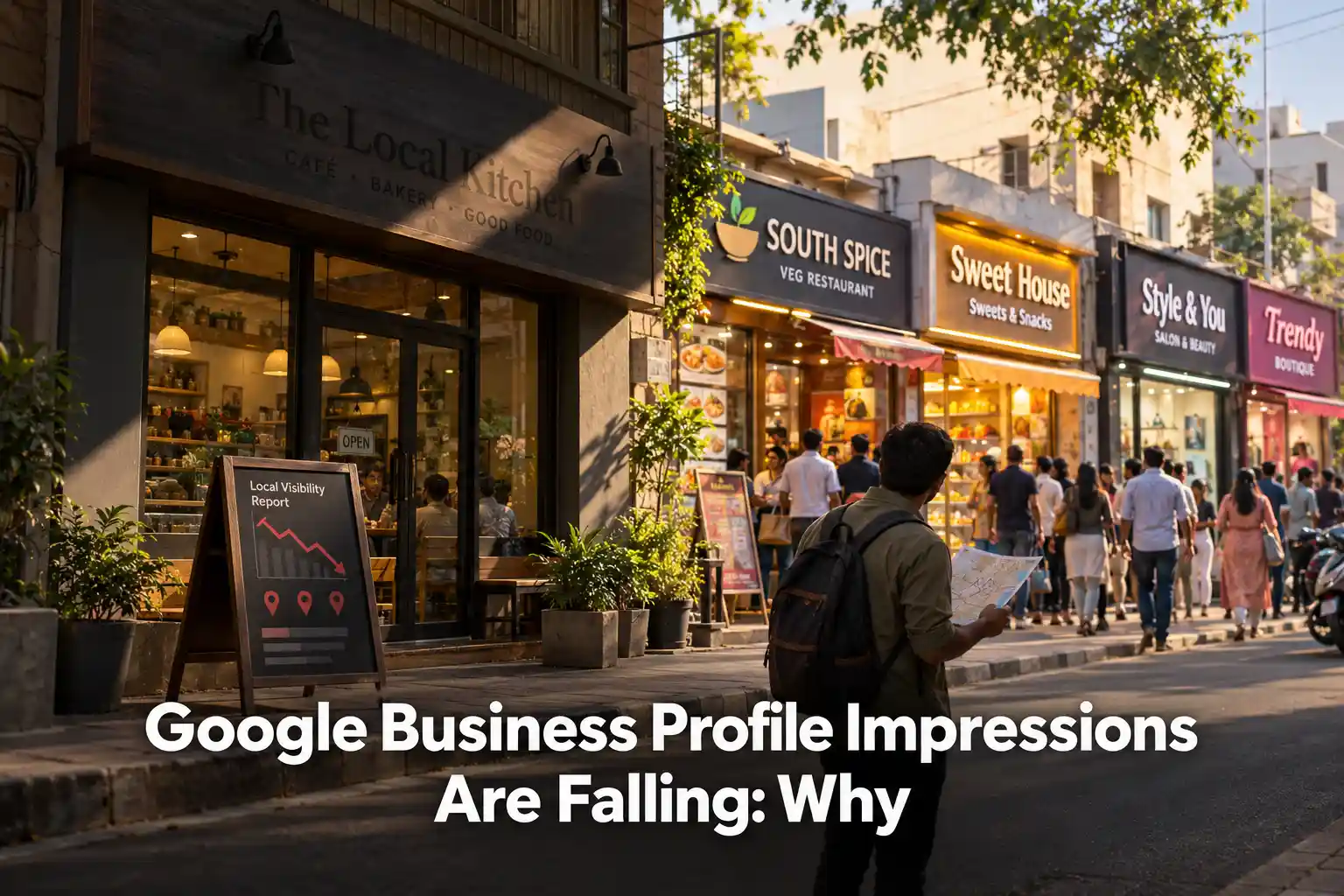
Google Business Profile Impressions Are Falling: Why Google Business Profile impressions are falling because AI Overviews and zero-click results now…
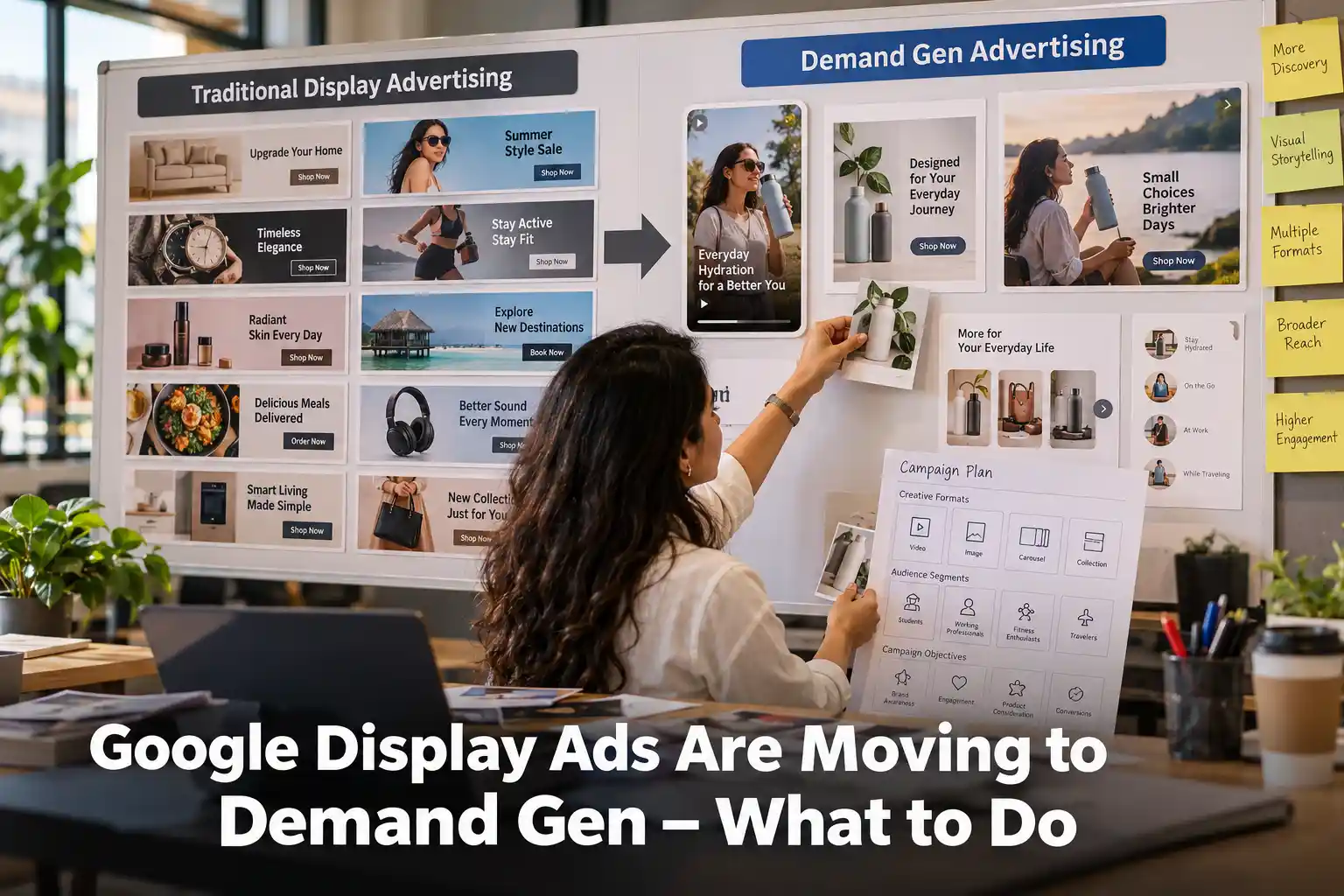
Google Display Ads Are Moving to Demand Gen – What to Do Google Display Ads are moving into Demand Gen,…

ChatGPT Visual Ads Are Coming. What Brands Should Know Ask ChatGPT to create an image, and you may soon see…
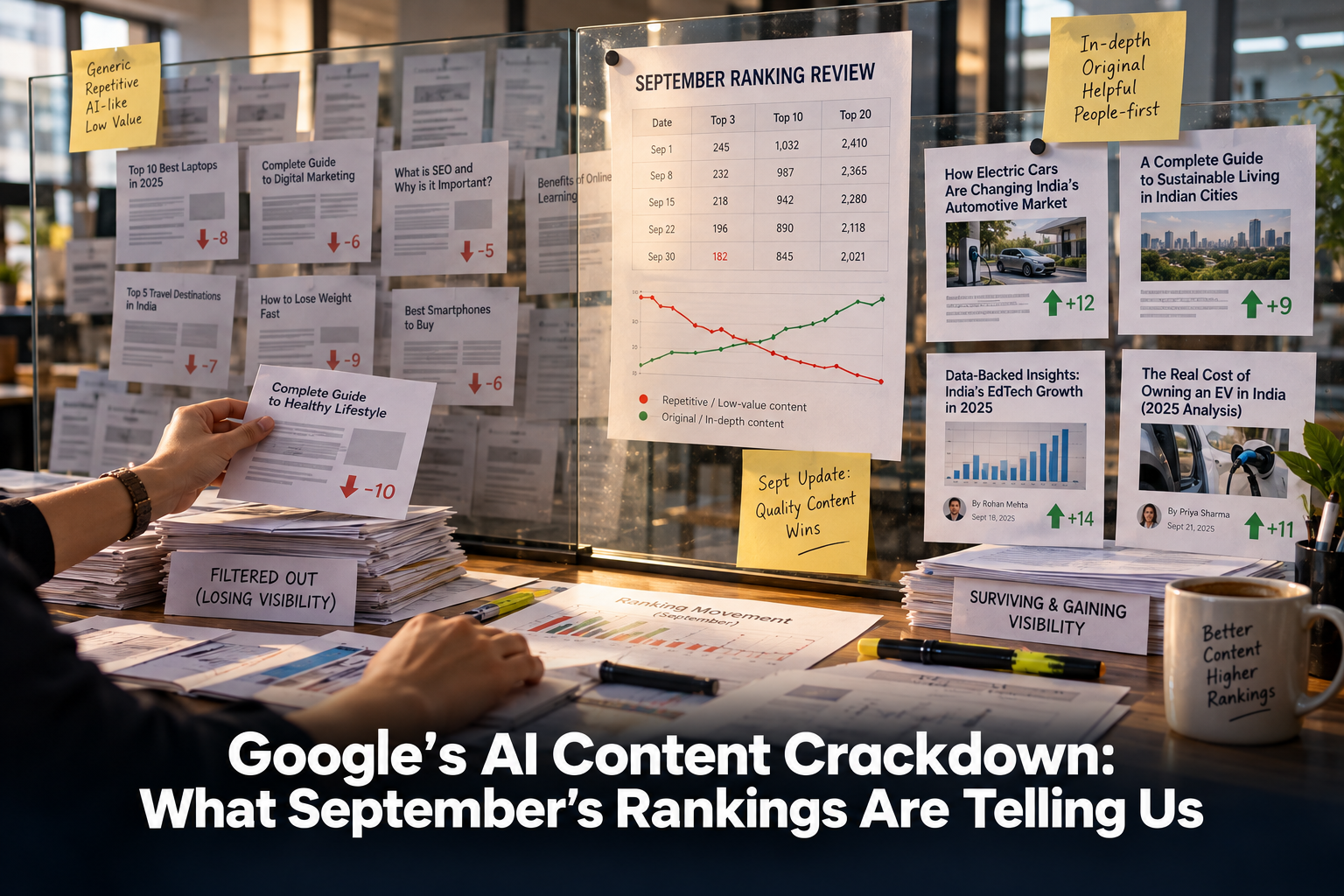
Google’s AI Content Crackdown: What September’s Rankings Are Telling Us Google’s AI content crackdown became one of the most talked-about…
Google Is Moving Your Ads to AI Max — Here’s What to Do AI Max is Google’s newest bid to…
Gemini 3.7 Flash Is Upgrading Google AI Mode — What to Do Gemini 3.7 Flash arrived inside Google AI Mode…
Used vs Cited in AI Search — What Your Brand Needs to Know AI search has quietly split brand visibility…
Category Framing: Why AI Recommends Some Brands Over Others Category framing is quietly deciding which brands show up when someone…
Why Your SEO Strategy Needs Less Content — What the Data Says Your SEO strategy probably has a publishing problem,…